
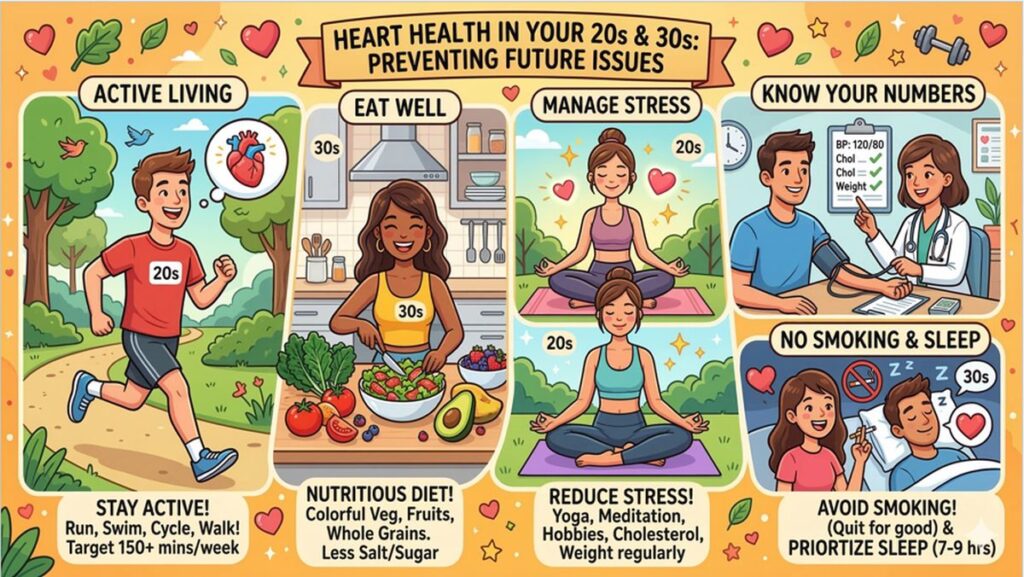
Preventing heart disease is often framed as a concern for later life, but the foundation for cardiovascular health is built decades before symptoms appear. In your 20s and 30s, the goal is primordial prevention: stopping the risk factors (like high blood pressure or cholesterol) from developing in the first place.
The “Silent” Risk Factors
Many issues that lead to heart attacks in your 50s begin as microscopic damage to the artery walls (atherosclerosis) in your 20s.
- Blood Pressure: Ideally, keep it below 120/80 mmHg. Consistent high pressure weakens the heart muscle over time.
- Cholesterol (Lipids): High LDL (“bad” cholesterol) can start depositing in arteries early. Get a baseline screening at least once in your 20s.
- Blood Sugar: Insulin resistance often begins in your 30s. Monitoring HbA1c or fasting glucose can catch pre-diabetes before it damages your blood vessels.
Essential Lifestyle Pillars
1. Movement Beyond the Gym
While 150 minutes of moderate aerobic activity per week is the standard, reducing sedentary time is just as vital. If you have a desk job, aim for “activity snacks”—5 minutes of movement for every hour sitting.
2. The Nutrition Shift
Focus on the quality of fats and carbohydrates rather than just calories:
- Swap Saturated for Unsaturated: Use olive oil or nuts instead of butter or palm oil.
- Fiber is Key: Aim for 25–30g daily. Fiber helps “sweep” cholesterol out of the system.
- Sodium Awareness: Excessive salt (common in processed foods) is a primary driver of early-onset hypertension.
3. Sleep and Stress
Chronic stress and poor sleep (less than 7 hours) trigger cortisol spikes and inflammation. Over a decade, this contributes to arterial stiffness and weight gain around the midsection, which is more metabolically active and dangerous for the heart.
Early Warning Signs to Never Ignore
Even if you are young and fit, these symptoms warrant a professional evaluation:
- Unusual Shortness of Breath: Feeling winded during activities that used to be easy.
- Chest Discomfort: Not just “crushing” pain, but also pressure, tightness, or a burning sensation during exertion.
- Palpitations: A feeling that your heart is skipping beats, racing, or “flopping” in your chest.
- Leg Swelling: Unexplained swelling in the ankles or feet at the end of the day.
Proactive Habits
| Action | Frequency |
| Blood Pressure Check | At least once a year |
| Cholesterol Panel | Every 4–6 years (if results are normal) |
| Weight and Waist/Hip Ratio | Monitor annually to track visceral fat |
| Smoking/Vaping | Quit entirely; there is no “safe” amount for arterial health |
Note: Family history is a significant non-modifiable risk. If a close relative had a heart attack before age 55 (men) or 65 (women), you may need earlier and more frequent screenings.