
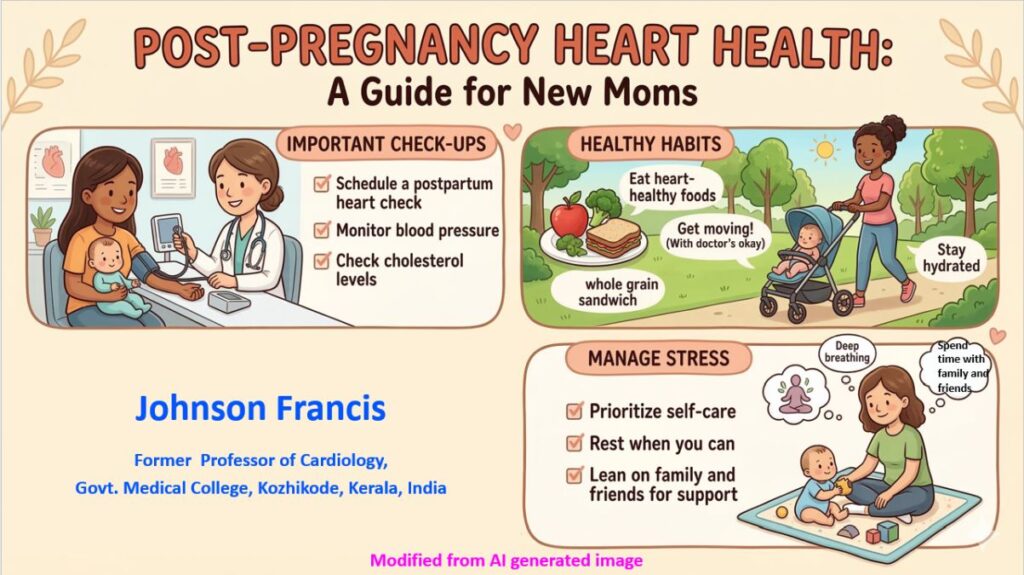

Here is a guide to what every woman should know about protecting her heart after pregnancy and delivery.
1. Recognize the “Red Flags”
Postpartum preeclampsia and other cardiac issues can arise up to six weeks after delivery. Seek medical attention immediately if you experience:
- Severe headaches that don’t go away with usual remedies.
- Vision changes (blurriness, flashing lights, or spots).
- Sudden swelling in the face, hands, or legs (especially if one leg is more swollen than the other, which may indicate blood clots in deep veins, known as DVT or deep vein thrombosis).
- Shortness of breath, especially when lying flat.
- Chest pain or a racing, pounding heart.
2. The Pregnancy “Stress Test”
Pregnancy acts as a natural “stress test” for the heart. If you experienced certain complications during pregnancy, you have a higher statistical risk of developing cardiovascular disease later in life. These include:
- Gestational Hypertension or Preeclampsia.
- Gestational Diabetes.
- Preterm birth (before 37 weeks).
- Small-for-gestational-age delivery.
Note: These aren’t guarantees of future heart trouble, but they are “early warning signs” that allow you to take proactive steps now.
3. Key Numbers to Track
Standard postpartum checkups often focus on healing and contraception, but heart health should be on the agenda. Ensure that the following are monitored:
- Blood Pressure: Ideally below 120/80 mmHg.
- Cholesterol Levels: Specifically your LDL and HDL.
- Blood Sugar: Especially if you had gestational diabetes.
4. Long-Term Protective Habits
Small, sustainable changes can significantly lower your long-term risk:
| Factor | Recommendation |
|---|---|
| Breastfeeding | If possible, breastfeeding for 6+ months is linked to lower maternal blood pressure and a reduced risk of type 2 diabetes. |
| Movement | Once cleared by your doctor, aim for 150 minutes of moderate activity per week. Even walking with the stroller counts! |
| Nutrition | Focus on a Mediterranean-style diet: leafy greens, healthy fats (like olive oil or nuts), and lean proteins. |
| Sleep | While difficult with a newborn at your side, chronic sleep deprivation can raise blood pressure. Try to prioritize rest whenever feasible. |
Your “Heart Health” Checklist
- Schedule a Follow-up: Don’t skip your 6-week postpartum visit.
- Inform Future Doctors: Always tell new healthcare providers about any pregnancy complications you had, even years later.
- Monitor Your Mood: Postpartum anxiety and depression can physically stress the heart. Mental health is heart health.