
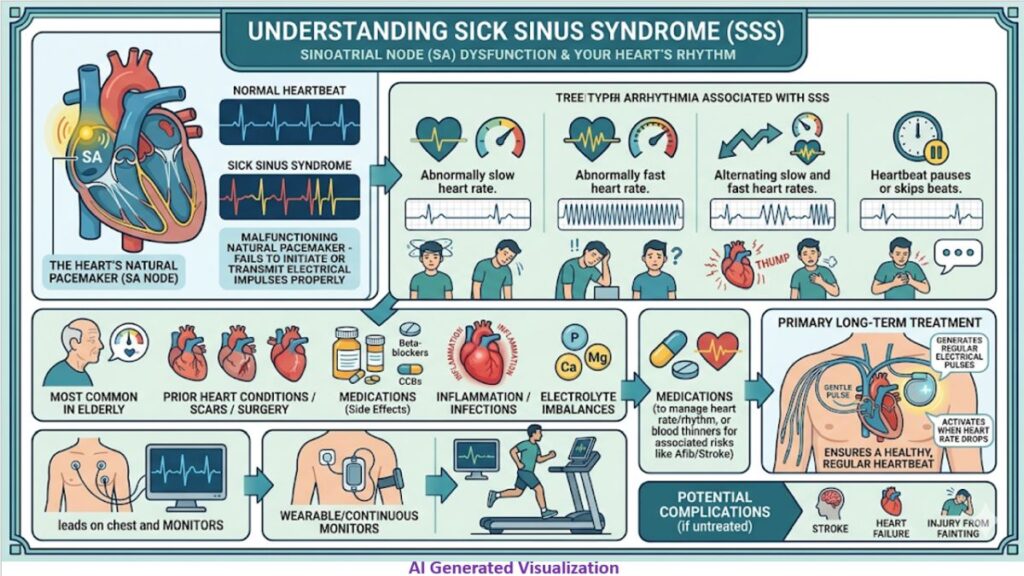

Sick Sinus Syndrome (SSS), also known as sinus node dysfunction (SND), is a collection of heart rhythm disorders caused by a malfunctioning sinoatrial (SA) node—the heart’s primary natural pacemaker. When the SA node fails to generate or transmit electrical impulses properly, the heart cannot maintain a normal rate or rhythm to meet the body’s physiological demands.
Key Arrhythmic Manifestations
SSS is not a single disease but a spectrum of arrhythmias. A patient may exhibit one or a combination of the following:
- Profound Sinus Bradycardia: A persistent, unexpectedly slow heart rate (typically < 50 bpm) that is inappropriate for the physiological state and not caused by medications or athletic conditioning.
- Sinus Pauses or Arrest: The SA node transiently fails to fire, leading to dropped P waves and periods of asystole. Pauses lasting longer than 3 seconds are highly suggestive of SSS. If the pause is long enough, a lower subsidiary pacemaker (like the AV node) will typically initiate an “escape beat.”
- Sinoatrial (SA) Exit Block: The SA node successfully generates an electrical impulse, but the signal is blocked in the perinodal tissue before it can depolarize the atria.
- Tachycardia-Bradycardia (Tachy-Brady) Syndrome: A classic and complex presentation characterized by alternating periods of abnormally fast atrial arrhythmias (most commonly atrial fibrillation or atrial flutter) and profound bradycardia. The bradycardia or prolonged pauses typically occur immediately upon the spontaneous termination of the tachyarrhythmia, before the SA node “wakes up” and resumes pacing.
Etiology of Sinus Node Dysfunction
The causes of sinus node dysfunction are generally divided into intrinsic damage to the node itself and extrinsic factors influencing its function.
Intrinsic Causes:
- Idiopathic Degeneration: The most common cause, involving age-related progressive fibrosis and calcification of the SA node and surrounding atrial myocardium.
- Ischemic Heart Disease: Damage to the SA node from myocardial infarction, particularly involving the right coronary artery (which supplies the SA node in ~60% of people).
- Infiltrative Diseases: Conditions like amyloidosis, sarcoidosis, or hemochromatosis.
- Surgical Trauma: Scarring from prior cardiac surgeries, such as valve replacements or congenital defect repairs.
Extrinsic Causes:
- Medications: Beta-blockers, non-dihydropyridine calcium channel blockers (diltiazem, verapamil), digoxin, and various antiarrhythmic drugs.
- Autonomic Dysfunction: Hypersensitive carotid sinus syndrome or abnormally high vagal tone.
- Metabolic Derangements: Hypothyroidism, hypothermia, or severe hypoxia.
Clinical Presentation
Many patients are asymptomatic in the early stages. When symptoms do occur, they are typically due to cerebral hypoperfusion (from bradycardia/pauses) or palpitations (from tachyarrhythmias):
- Syncope or near-syncope (fainting)
- Dizziness and lightheadedness
- Fatigue and exercise intolerance
- Shortness of breath
- Palpitations or a “fluttering” sensation in the chest
Management
Treatment is strictly reserved for symptomatic patients. Asymptomatic bradycardia generally does not require intervention.
- Correct Reversible Causes: The first step is to eliminate offending medications or correct underlying metabolic imbalances (e.g., treating hypothyroidism).
- Permanent Pacing: For chronic, symptomatic SSS, a permanent pacemaker is the definitive treatment. Dual-chamber (DDDR) pacing is typically preferred to maintain AV synchrony and reduce the risk of future atrial fibrillation.
- Managing Tachy-Brady Syndrome: This presents a unique challenge because medications used to control the tachyarrhythmia (like beta-blockers) will worsen the bradycardia. The standard approach is to implant a permanent pacemaker to secure a baseline heart rate, which then safely allows the introduction of rate-controlling medications for the tachycardic episodes. Anticoagulation is also frequently required due to the high risk of stroke associated with atrial fibrillation.