
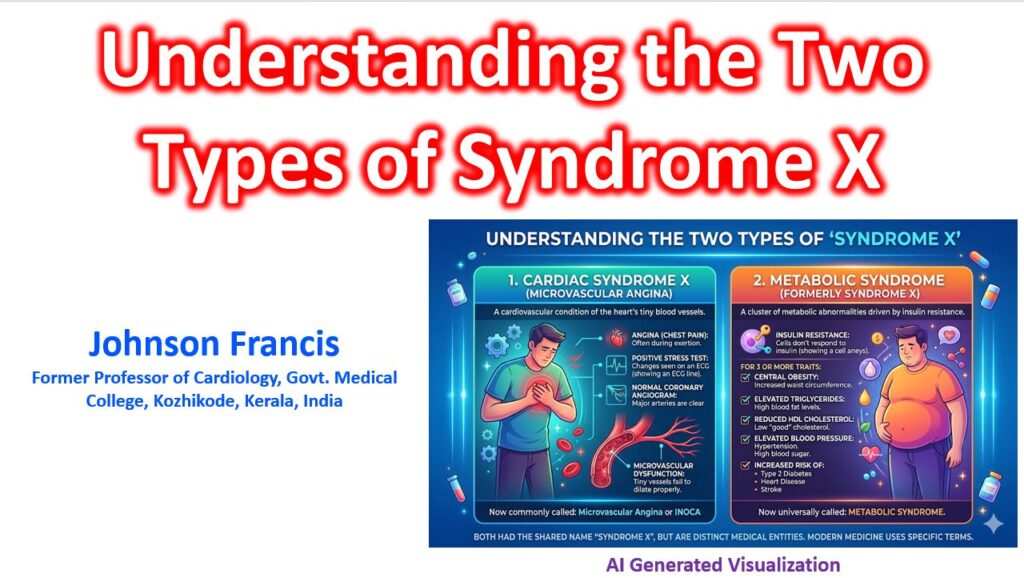

The term “Syndrome X” historically refers to two completely distinct medical conditions—one cardiovascular and one metabolic. Because the shared name often caused confusion, modern medicine has largely shifted to using more specific terminology for both.
1. Cardiac Syndrome X (Microvascular Angina)
This is a cardiovascular condition characterized by classic symptoms of angina (chest pain) despite normal-appearing major coronary arteries.
- The Mechanism: While the large, epicardial coronary arteries are free of obstructive plaque, the tiny blood vessels branching off them (the microvasculature) fail to dilate properly or unexpectedly constrict. This reduces oxygen-rich blood flow to the heart muscle, causing ischemia.
- Clinical Presentation: Patients typically present with exertional chest pain and positive stress test results (such as ST-segment depression on an ECG). However, a subsequent coronary angiogram will show completely clear, unobstructed major arteries.
- Modern Terminology: It is now more commonly referred to as microvascular angina or categorized under INOCA (Ischemia and No Obstructive Coronary Artery disease).
2. Metabolic Syndrome (Reaven’s Syndrome X)
Coined by endocrinologist Dr. Gerald Reaven in 1988, this refers to a dangerous cluster of metabolic abnormalities that significantly increase a patient’s risk of developing type 2 diabetes, cardiovascular disease, and stroke.
- The Mechanism: The core underlying pathophysiology is insulin resistance—where the body’s cells do not respond normally to insulin—often coupled with central adiposity and systemic inflammation.
- Clinical Presentation: A diagnosis is typically made if a patient presents with three or more of the following traits:
- Central (abdominal) obesity
- Elevated fasting triglycerides
- Reduced HDL (“good”) cholesterol
- Elevated blood pressure (hypertension)
- Elevated fasting blood glucose
- Modern Terminology: The “X” has been dropped, and this is now almost universally called Metabolic Syndrome.
To easily differentiate them: Cardiac Syndrome X involves a functional disorder of the heart’s microcirculation, while Metabolic Syndrome X is a systemic clustering of endocrine and cardiovascular risk factors.