
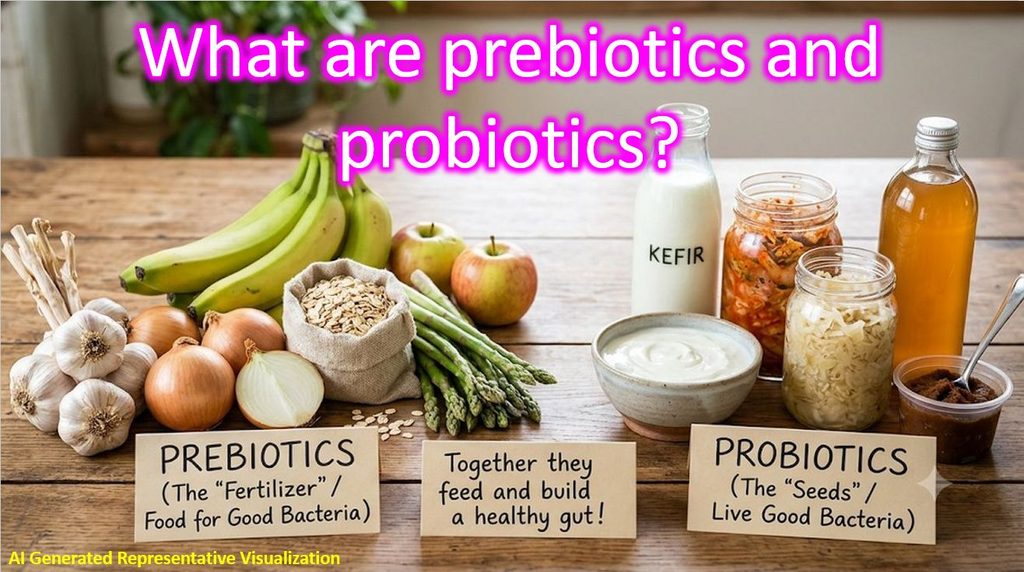

Probiotics are live, beneficial bacteria and yeasts that add to the population of good microbes in your digestive system. They help maintain a healthy gut microbiome, aid in digestion, and support your immune system. Food sources: Yogurt and similar products.
Prebiotics are specialized plant fibers that your body cannot digest. Instead, they pass through your digestive system to the lower colon, where they act as fertilizer or “food” for the healthy bacteria (probiotics) already living in your gut.
- Food sources: Garlic, onions, underripe bananas, oats, asparagus, and apples.
How They Work Together
Think of your gut as a garden. Probiotics are the new seeds you plant, while Prebiotics are the fertilizer that helps those seeds grow and thrive. When you eat them together—like having yogurt (probiotic) topped with oats and bananas (prebiotics)—it is called a synbiotic meal, which maximizes the benefits for your digestive health.
Common Benefits
- Improved Gut Microbiota: Helps restore or balance the community of microorganisms in the digestive tract.
- Enhanced Short-Chain Fatty Acids (SCFAs): Fermentation produces beneficial metabolites that strengthen the gut barrier and reduce inflammation.
- Metabolic and Immune Support: Studied for potential benefits in managing irritable bowel syndrome (IBS), supporting metabolic health, and improving immune function.