


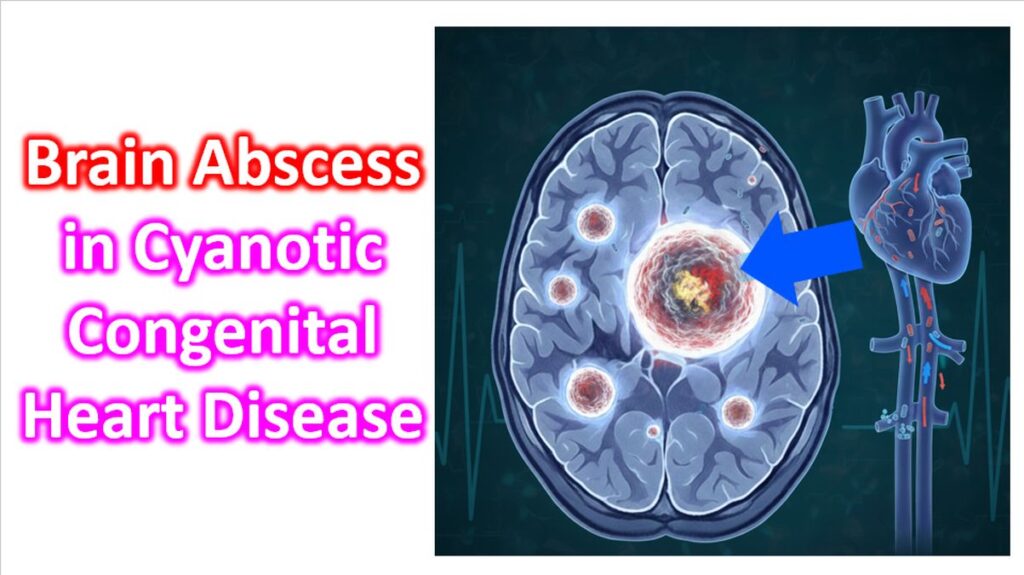

Brain abscess is a serious and potentially life-threatening complication of cyanotic congenital heart disease (CCHD), such as Tetralogy of Fallot or Transposition of the Great Arteries. In individuals with these conditions, the risk is significantly higher than in the general population due to specific physiological changes.
Why the Risk Increases
In a healthy heart, blood traveling from the body passes through the lungs, where the pulmonary capillary bed acts as a biological filter, trapping bacteria before the blood returns to the brain. In CCHD, two main factors bypass this safety mechanism:
- Right-to-Left Shunt: Deoxygenated blood bypasses the lungs and moves directly into the systemic circulation. This allows bacteria (which might otherwise be filtered out) to reach the brain directly via the carotid arteries.
- Hypoxia and Polycythemia: Chronic low oxygen levels cause the body to produce more red blood cells (polycythemia), making the blood more viscous. This can lead to small areas of “micro-infarction” or tissue death in the brain, creating a perfect, low-oxygen environment for anaerobic bacteria to grow.
Clinical Presentation
The “classic triad” of brain abscess is often incomplete, but clinicians look for:
- Headache: Often the most common and earliest symptom.
- Fever: Present in only about half of cases.
- Focal Neurological Deficits: Such as weakness on one side, vision changes, or seizures.
Note: Because children with CCHD may already have baseline fatigue or cyanosis, a new-onset headache or a change in mental status should always be treated as a red flag.
Diagnostic and Management Approach
If a brain abscess is suspected, the following steps are typically prioritized:
1. Imaging
Contrast-enhanced CT or MRI. MRI is generally preferred for its ability to detect early “cerebritis” (the stage before a full abscess forms) and to differentiate an abscess from a tumor. Please note that contrast administration for contrast enhanced CT has additional risks in a cyanotic infant.
2. Microbiology
Common pathogens involved are often anaerobic or microaerophilic, such as:
- Streptococcus viridans
- Staphylococcus aureus
- Haemophilus species
3. Treatment
- Medical: High-dose intravenous antibiotics that can cross the blood-brain barrier, usually for 6–8 weeks.
- Surgical: Aspiration (draining the pus) or complete excision of the abscess may be necessary, especially if the abscess is large or causing significant pressure on the brain.
Prevention
The most effective way to prevent these abscesses is through:
- Surgical Correction: Repairing the underlying heart defect to eliminate the right-to-left shunt.
- Dental Hygiene: Many of the bacteria involved originate in the mouth; regular dental care reduces the risk of bacteria entering the bloodstream.