


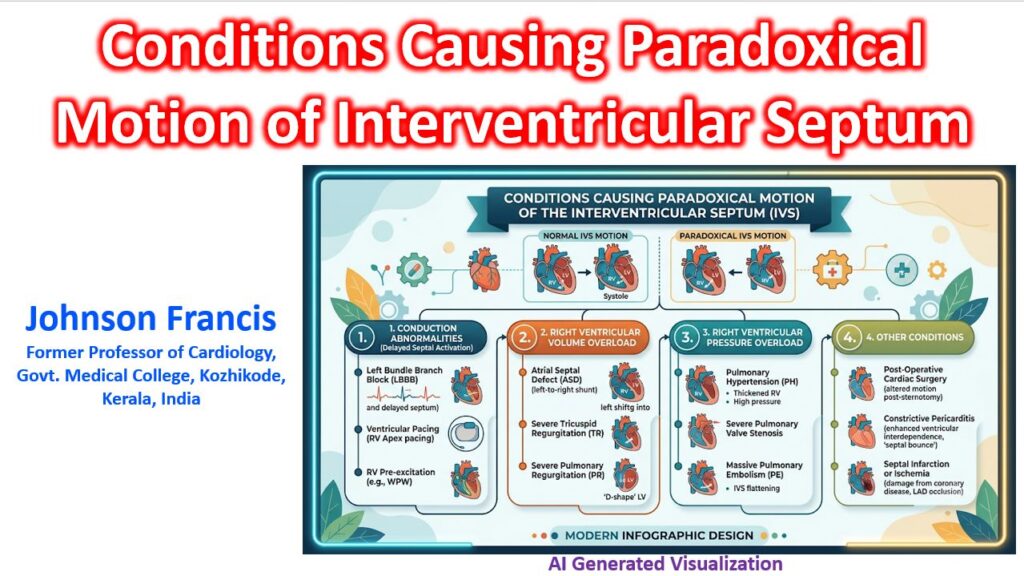

Paradoxical motion of the interventricular septum (IVS) occurs when the septum moves away from the left ventricular (LV) free wall during systole, disrupting the normal, coordinated inward contraction of the ventricles. This echocardiographic finding is typically driven by electrical conduction delays, altered hemodynamics, structural changes, or the loss of normal pericardial constraint.
1. Conduction Abnormalities (Electrical)
When the normal sequence of ventricular depolarization is disrupted, the septum and the LV lateral wall contract out of sync.
- Left Bundle Branch Block (LBBB): The right ventricle (RV) and IVS activate before the LV lateral wall. This causes an early, brief septal contraction toward the LV (the “septal beak”), followed by paradoxical movement away from the LV as the delayed lateral wall finally contracts.
- Right Ventricular Pacing: Placing a pacing lead in the RV apex creates an artificial LBBB pattern, leading to the same mechanical dyssynchrony.
- Pre-excitation Syndromes (WPW): Specifically, right-sided accessory pathways (Type B) that cause early, anomalous activation of the RV and septum.
- Premature Ventricular Contractions (PVCs): Ectopic beats originating in the right ventricle.
2. Right Ventricular Overload (Hemodynamic)
Changes in the pressure or volume gradients between the RV and LV can push the septum out of its normal position.
- RV Volume Overload: Conditions like Atrial Septal Defect (ASD), severe tricuspid regurgitation, or severe pulmonary regurgitation. The massive RV diastolic volume pushes the septum into the LV during diastole (creating a D-shaped left ventricle on the short axis). During systole, the septum snaps back toward the RV, appearing paradoxical.
- RV Pressure Overload: Severe pulmonary hypertension or massive pulmonary embolism can cause the septum to flatten or bow into the LV during systole as RV pressure equals or exceeds LV pressure.
3. Loss of Pericardial Constraint
- Post-Cardiac Surgery: This is one of the most frequent causes. Opening the pericardium during surgery removes the normal mechanical constraint on the heart. During systole, the entire heart shifts anteriorly in the chest cavity, which appears on an echo as paradoxical septal motion — even if the intrinsic myocardial thickening remains normal.
- Constrictive Pericarditis: Enhanced ventricular interdependence leads to a rapid, transient movement of the septum toward the LV in early diastole. This is commonly referred to as a “septal bounce” or shudder, which is often accompanied by abnormal systolic motion.
4. Ischemic and Structural Causes
- Septal Infarction: An occlusion of the Left Anterior Descending (LAD) artery can cause ischemic akinesis or dyskinesis of the anterior septum. The fibrotic, non-contractile septum is passively pushed outward during LV systole due to the rising intra-cavitary pressure.