


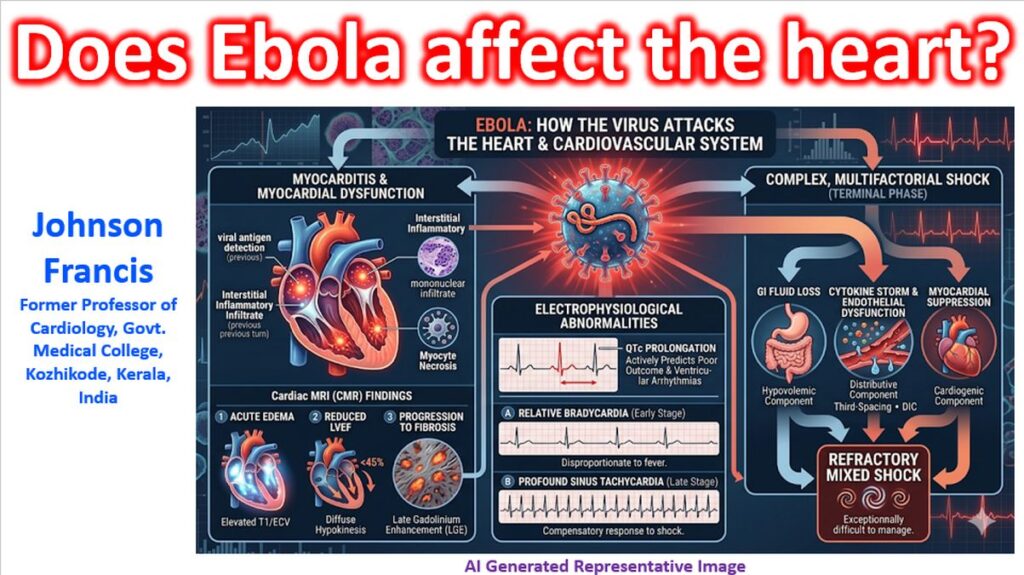

While Ebola Virus Disease (EVD) is primarily recognized for its profound hemorrhagic complications and systemic shock, direct and indirect cardiovascular involvement is a significant and often fatal component of the clinical picture.
Myocarditis and Myocardial Dysfunction
Ebola can induce significant myocardial inflammation. Post-mortem immunohistochemistry of fatal EVD cases has demonstrated abundant viral antigen in the endothelium, the endocardium, and the extracellular spaces of the subendocardium.
Recent Cardiac MRI (CMR) studies of EVD survivors have documented findings consistent with the Lake Louise criteria for myocarditis. These include:
- Elevated native T1 and abnormal extracellular volume fraction (ECV) indicating acute myocardial edema and capillary leak.
- Diffuse left ventricular hypokinesis resulting in reduced ejection fraction.
- Late gadolinium enhancement (LGE) on follow-up imaging, signifying progression from acute focal inflammation to myocardial fibrosis.
Electrophysiological Abnormalities
The inflammatory state and direct myocardial injury frequently disrupt the heart’s electrical system.
- QTc Prolongation: This is a notable and frequent finding during the acute illness. Significant QTc prolongation acts as a strong predictor of poor clinical outcomes and predisposes the patient to life-threatening ventricular arrhythmias.
- Heart Rate Dysregulation: Patients may present with relative bradycardia early in the clinical course, which often sharply transitions to profound sinus tachycardia as intravascular volume depletion and systemic inflammation worsen.
The Hemodynamic Collapse
The hallmark terminal event in severe EVD is a complex, multifactorial shock. It is rarely purely hypovolemic, even with the profuse gastrointestinal fluid losses characteristic of the disease.
The virus directly infects mononuclear phagocytes and endothelial cells, triggering a massive cytokine storm (upregulation of proinflammatory cytokines) and disseminated intravascular coagulation (DIC). This leads to profound endothelial dysfunction and third-spacing. Third spacing is the abnormal shifting of bodily fluid from the bloodstream (intravascular space) into non-functional body spaces, such as the space between cells (interstitial space) or body cavities. When you compound this severe distributive and hypovolemic state with the suppressed LVEF from concurrent acute myocarditis, the resulting mixed shock is exceptionally refractory to standard clinical management.