


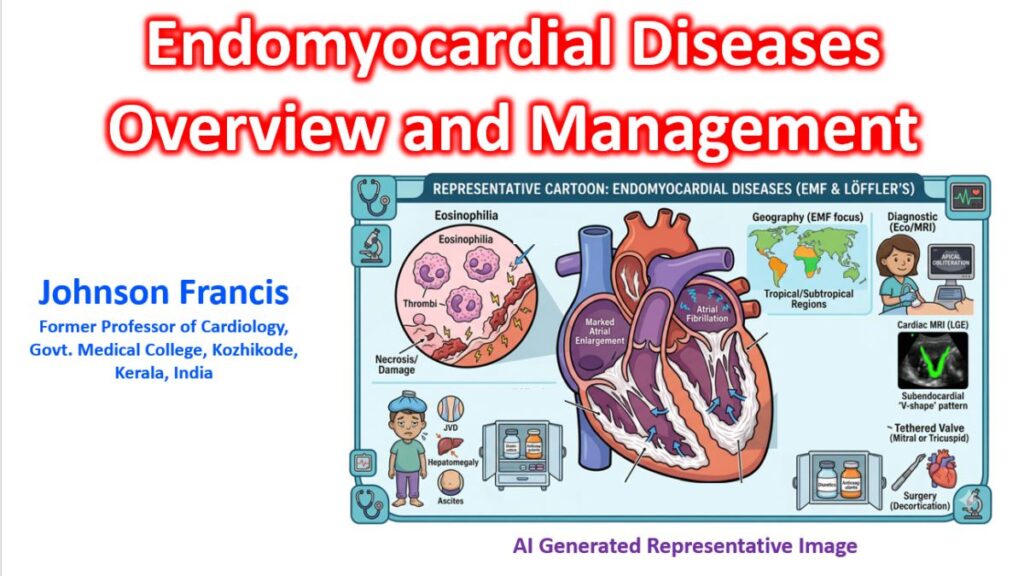

Endomyocardial diseases represent a diverse group of conditions characterized by pathological changes in the endocardium and the adjacent myocardium. These conditions often lead to restrictive cardiomyopathy, heart failure, and systemic complications.
1. Major Classification
The two primary conditions falling under this umbrella are often discussed together due to their clinical similarities, though they are geographically and etiologically distinct.
Endomyocardial Fibrosis (EMF)
- Geography: Primarily seen in tropical and subtropical regions (Africa, parts of India, and South America).
- Pathology: Progressive fibrosis of the endocardium, involving the apex and inflow tracts of the right or left ventricles (or both). The disease passes through an initial phase of acute myocarditis, later leading to necrotic and thrombotic phases and finally the fibrotic phase. It is the fibrotic phase which usually presents as EMF to the hospitals.
- Etiology: Largely unknown, but theories suggest links to dietary toxins (e.g., cassava), malnutrition, cerium levels, or infections (parasites).
Löffler Endocarditis (Hypereosinophilic Syndrome)
- Geography: Global distribution.
- Pathology: Similar to EMF but associated with severe, chronic peripheral eosinophilia.
2. Clinical Presentation
The symptoms usually reflect restrictive physiology, where the heart becomes stiff and cannot fill properly during diastole.
- Right-Sided Failure: Jugular venous distension (JVD), hepatomegaly, ascites, and peripheral edema.
- Left-Sided Failure: Dyspnea on exertion, orthopnea, and pulmonary congestion.
- Arrhythmias: Atrial fibrillation is common due to atrial enlargement.
- Thromboembolism: Risk of systemic or pulmonary emboli from mural thrombi.
3. Diagnostic Framework
Echocardiography (First-line)
The hallmark is the obliteration of the ventricular apex by fibrous tissue or thrombus. You will often see:
- Marked atrial enlargement (“giant atria”).
- Normal or slightly reduced systolic function with severe diastolic dysfunction.
- Tethering of the atrioventricular valves (Mitral or Tricuspid regurgitation).
Cardiac MRI (Gold Standard)
MRI is superior for tissue characterization.
- Late Gadolinium Enhancement (LGE): Typically shows subendocardial enhancement in a “V” shape at the apex. A double V shape has also been described.
- Thrombus Detection: Better sensitivity than echo for identifying apical clots.
Endomyocardial Biopsy
While definitive for seeing eosinophilic infiltration or dense collagen, it is often avoided due to the risk of dislodging thrombi or “sampling error” if the biopsy misses the fibrotic patch.
4. Management Strategies
Treatment focuses on symptom relief and preventing complications.
- Medical: Diuretics for congestion and anticoagulation (warfarin) for thrombus prevention. In Löffler’s, steroids or other drugs in unresponsive cases (e.g., Imatinib) are used to lower eosinophil counts.
- Surgical: Endomyocardial decortication (surgical removal of the fibrous peel) and valve replacement may be necessary in advanced cases.
- Prognosis: Generally poor once restrictive symptoms appear, necessitating close monitoring for heart failure progression.