


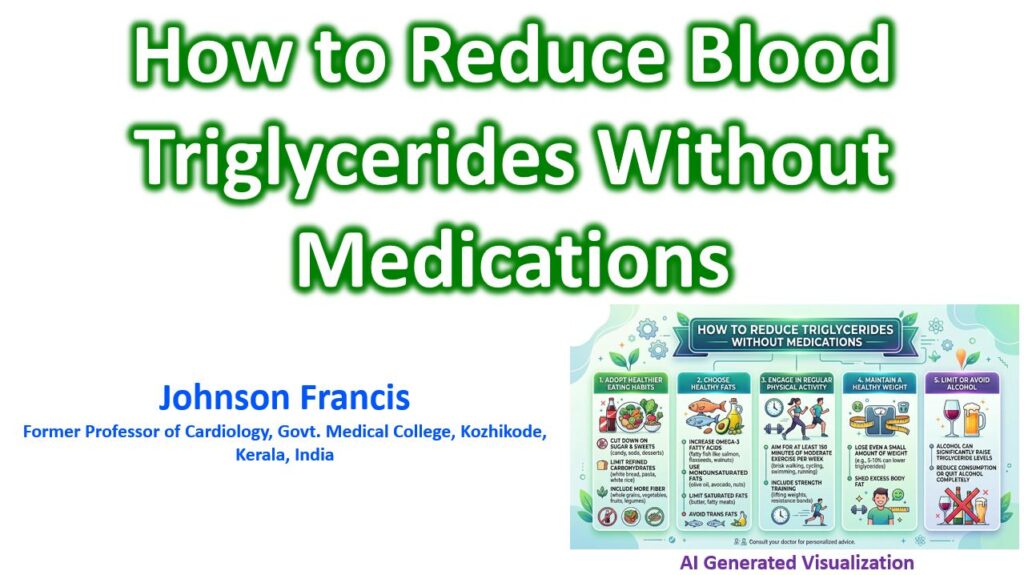

The cornerstone of managing hypertriglyceridemia is targeting hepatic very-low-density lipoprotein (VLDL) synthesis and upregulating lipoprotein lipase (LPL) clearance of triglyceride-rich lipoproteins. For patients with persistently elevated triglycerides (>150 mg/dL) without severe genetic lipid disorders, lifestyle interventions often yield a more profound relative reduction than isolated statin therapy. Here is the evidence-based approach to lowering triglycerides without pharmacology:
1. Carbohydrate Restriction
The most potent dietary driver of hypertriglyceridemia is an excess of refined carbohydrates and fructose. Fructose is particularly lipogenic because it bypasses hepatic phosphofructokinase regulation, driving unchecked de novo lipogenesis.
- Mechanism: Reducing simple carbohydrates decreases hepatic substrate availability for fatty acid synthesis, subsequently lowering VLDL particle secretion.
- Intervention: Eliminate sugar-sweetened beverages, limit fructose, and transition to complex, high-fiber carbohydrates. Soluble fiber blunts postprandial glucose spikes, reducing the insulin-driven esterification of free fatty acids into triglycerides.
2. Alcohol Cessation
Alcohol is a powerful secretagogue for VLDL.
- Mechanism: Ethanol metabolism generates excess NADH, altering the hepatocellular redox state. This shifts the hepatic balance toward fatty acid synthesis and away from beta-oxidation. It also directly impairs the clearance of chylomicrons.
- Intervention: For patients with triglycerides >500 mg/dL, strict abstinence is required to mitigate the risk of acute pancreatitis. For those in the 150–499 mg/dL range, limiting intake to rare, moderate occasions (or complete cessation) is highly recommended.
3. Weight Loss and Insulin Sensitization
Adipose tissue insulin resistance leads to an unrestrained flux of free fatty acids into the portal circulation.
- Mechanism: Weight loss improves systemic insulin sensitivity, which suppresses hormone-sensitive lipase in adipose tissue (reducing FFA flux to the liver) and upregulates LPL activity in the capillary beds, enhancing the clearance of VLDL and chylomicrons.
- Intervention: A sustained caloric deficit aiming for a 5–10% reduction in total body weight can significantly reduce circulating triglyceride levels.
4. Aerobic Exercise
Physical activity directly impacts lipid partitioning and utilization.
- Mechanism: Skeletal muscle contraction acutely increases local LPL expression, accelerating the hydrolysis of triglycerides from circulating lipoproteins to fuel the active muscle tissue.
- Intervention: At least 150 minutes of moderate-intensity aerobic exercise per week. The triglyceride-lowering effect of an acute bout of exercise lasts for roughly 24 to 48 hours, highlighting the physiological need for consistency.
5. Dietary Fat Modification
While total fat reduction is often mistakenly prioritized by patients, the type of fat is much more critical.
- Mechanism: Omega-3 fatty acids Eicosapentaenoic Acid and Docosahexaenoic Acid (EPA/DHA) are poor substrates for diacylglycerol O-acyltransferase (DGAT), the enzyme responsible for the final step of triglyceride synthesis. They also downregulate Sterol Regulatory Element-Binding Protein 1c (SREBP-1c), further reducing lipogenesis.
- Intervention: Replace saturated and trans fats with unsaturated fats. Increase consumption of marine Omega-3s (e.g., salmon, mackerel, sardines) 2 to 3 times per week.
Key insight: While dietary optimization is foundational, it is the combination of carbohydrate restriction, weight loss, and exercise that produces the synergistic upregulation of LPL needed for profound triglyceride reduction.