


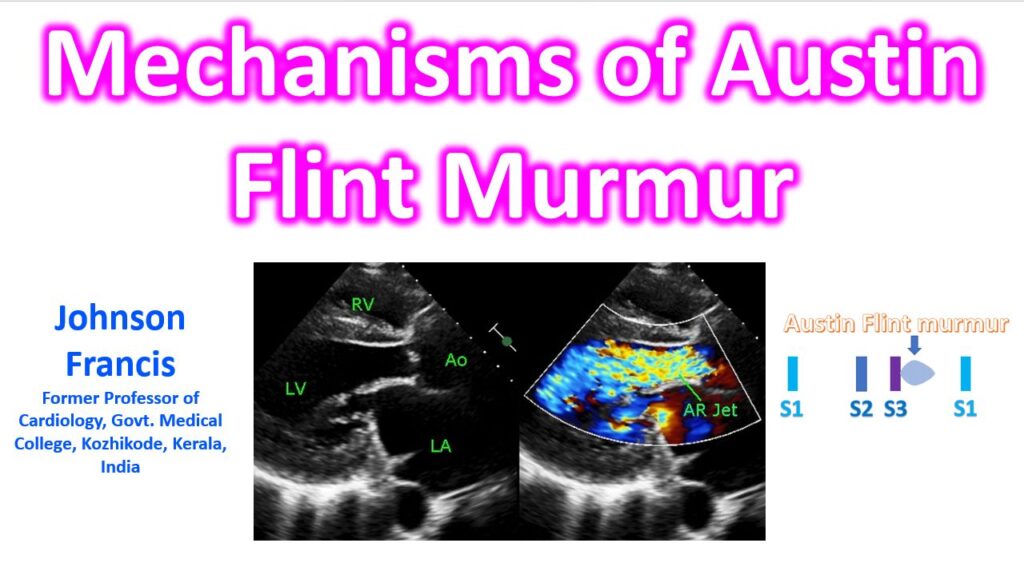

The Austin Flint murmur is a low-pitched, mid-to-late diastolic rumbling murmur heard best at the cardiac apex in patients with moderate-to-severe aortic regurgitation (AR). It mimics the murmur of mitral stenosis but occurs in a structurally normal mitral valve. Historically attributed to a single mechanism, modern echocardiography and Doppler studies have revealed that the genesis of the murmur is actually multifactorial.
Functional Mitral Stenosis (The Classic Mechanism)
The prevailing classical theory centers on the creation of a temporary, functional narrowing of the mitral orifice during diastole.
- Leaflet Impingement: The high-velocity retrograde jet of blood from the incompetent aortic valve is often directed toward the anterior mitral leaflet (AML). The physical impact of this jet pushes the AML upward into a partially closed position.
- Hemodynamic Flotation: In severe AR, the rapid backflow of blood causes a sharp rise in left ventricular end-diastolic pressure (LVEDP). This elevated pressure from below the mitral apparatus causes the leaflets to float prematurely toward a closed position.
- The Resulting Rumble: As normal antegrade blood from the left atrium attempts to cross this artificially narrowed mitral orifice during rapid ventricular filling, it creates a turbulent flow that generates the characteristic rumbling sound.
Flow Turbulence and Acoustic Vibrations (Modern Insights)
While functional stenosis plays a major role, echocardiographic studies have demonstrated that the Austin Flint murmur can sometimes occur even independently of rapid mitral inflow.
- Leaflet Flutter: The direct impact of the aortic regurgitant jet on the anterior mitral leaflet causes the tissue to rapidly flutter or shudder. This high-frequency vibration generates low-pitched acoustic shockwaves that are transmitted to the chest wall.
- Collision of Streams: The murmur is heavily amplified by the violent, turbulent mixing of two opposing blood columns within the left ventricle: the antegrade inflow from the left atrium and the retrograde jet from the aorta.
- Direct Endocardial Impact: Some Doppler studies suggest the acoustic rumble can be generated simply by the regurgitant aortic jet violently striking the left ventricular endocardium.
- Diastolic Mitral Regurgitation: In cases of acute, severe AR, LVEDP can rise so rapidly that it exceeds left atrial pressure during diastole. This pressure reversal forces the mitral valve closed and can cause a brief period of diastolic mitral regurgitation, which contributes to the murmur’s acoustic profile.
Differentiating Austin Flint from Organic Mitral Stenosis
Because both conditions produce an apical diastolic rumble, bedside differentiation relies on associated auscultatory findings and provocative maneuvers.
| Feature | Austin Flint Murmur (Severe AR) | Organic Mitral Stenosis |
| First Heart Sound (S1) | Soft or normal (due to premature mitral closure) | Loud |
| Opening Snap | Absent | Present |
| Amyl Nitrite Inhalation | Decreases murmur intensity (vasodilation reduces afterload and AR volume) | Increases murmur intensity (increased heart rate and flow across the mitral valve) |
| Echocardiographic Hallmark | High-frequency diastolic fluttering of the AML | Thickened, calcified leaflets with restricted motion (“hockey stick” appearance) |