


In a busy cardiac catheterization lab, operators and support staff are exposed to scatter X-ray radiation for extended periods. While traditional protective aprons use pure lead, modern lead-free aprons utilize an amalgamation of lightweight metals—such as titanium, bismuth, antimony, and tungsten—to achieve the same 0.5 mm Pb-equivalent protection. Because titanium alone has a lower atomic weight than lead, it must be combined with these other dense metals to block radiation effectively without becoming overly thick. Here is a breakdown of the pros and cons of using these lightweight, titanium-composite aprons.
Pros of Titanium/Lead-Free Aprons:
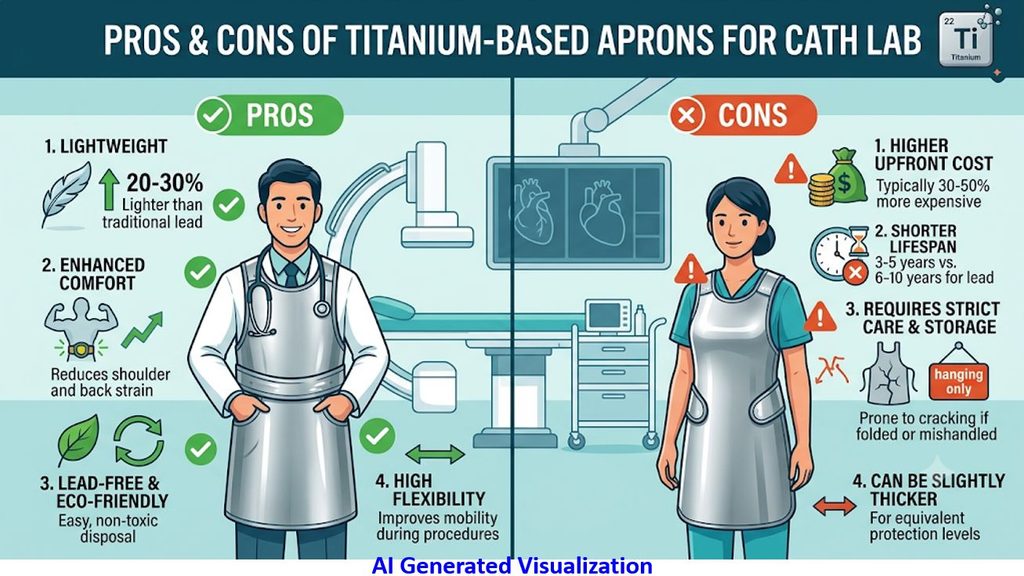
- Significantly Lighter:They weigh 20% to 30% less than traditional lead aprons, heavily reducing upper back, neck, and shoulder fatigue during long procedures.
- Enhanced Flexibility: Composite metal blends offer better mobility and ergonomics, allowing for a wider range of motion while working.
- Eco-Friendly Disposal: Because they do not contain toxic lead, they are much easier and safer to dispose off at the end of their lifecycle.
Cons of Titanium/Lead-Free Aprons:
- Higher Upfront Cost:Lead-free alternatives typically cost 30% to 50% more than standard lead versions.
- Shorter Lifespan:While traditional lead aprons can last 6 to 10 years, lightweight lead-free models generally need replacing every 3 to 5 years.
- Strict Storage Needs: The composite materials are prone to internal cracking if folded or left on tables; they must be strictly hung on dedicated apron hangers.