


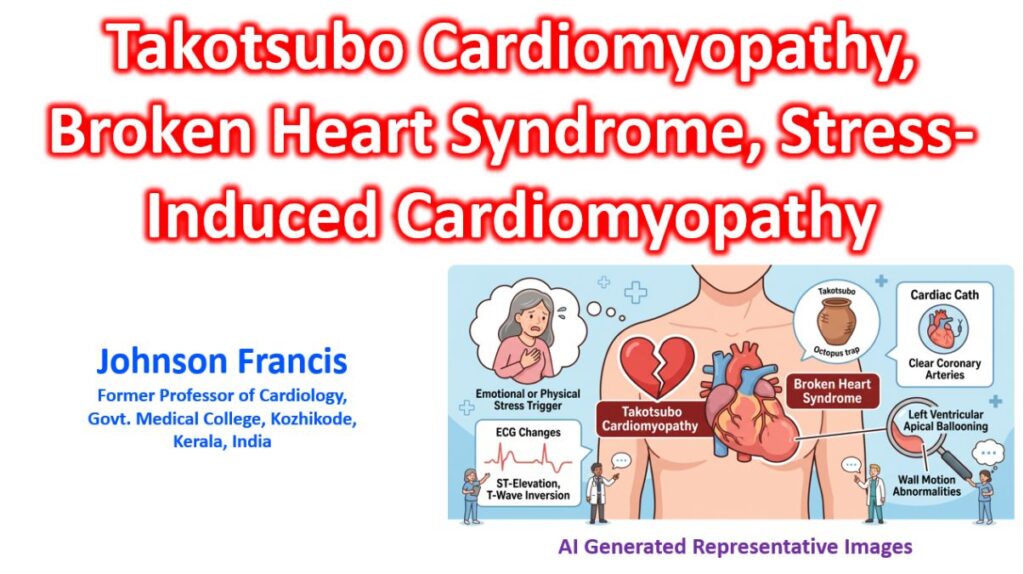

Takotsubo Cardiomyopathy (TTC), often called Broken Heart Syndrome or Stress-Induced Cardiomyopathy, is a fascinating clinical entity that mimics an acute myocardial infarction but typically occurs in the absence of obstructive coronary artery disease.
1. Pathophysiology: The Catecholamine Hypothesis
The most widely accepted mechanism is a “catecholamine storm.” High levels of circulating epinephrine and norepinephrine lead to:
- Microvascular Dysfunction: Epicardial or microvascular vasospasm.
- Direct Myocyte Toxicity: High concentrations of catecholamines can be directly toxic to myocytes, likely through calcium overload.
- Stimulus Trafficking: A switch in β2-adrenoceptor signaling from Gs (stimulatory) to Gi (inhibitory) pathways, which protects the heart from toxicity but results in profound, localized negative inotropy (stunning).
2. Clinical Presentation & Triggers
While the classic trigger is an emotional stressor (grief, anger, fear), physical stressors (stroke, surgery, asthma exacerbation) are actually more common and often carry a worse prognosis. No trigger may be found in nearly one third of patients.
- Demographics: Most cases occur in postmenopausal women, suggesting an estrogen-deficiency component that sensitizes the myocardium to stress. In the International Takotsubo Registry of 1750 patients published in NEJM, 89.8% were women (mean age, 66.8 years).
- Symptoms: Chest pain and dyspnea, indistinguishable from ACS.
3. Diagnosis
Diagnosis is often made in the cath lab when a patient with STEMI-like ECG changes shows “clean” coronaries. Key features include:
- Wall Motion Abnormalities: Transient dyskinesia of the apical and mid-ventricular segments, resulting in the “octopus trap” shape (apical ballooning).
- ECG Changes: ST-segment elevation (usually V2–V5), followed by deep, symmetric T-wave inversion and QT prolongation.
- Biomarkers: Moderate elevation of Troponin, which is often disproportionately low compared to the extent of wall motion abnormality. BNP/NT-proBNP is typically significantly elevated.
4. Morphological Variants
While Apical Ballooning is the classic form, other variants exist:
- Mid-ventricular: Involvement of the mid-segments only.
- Basal (Inverted Takotsubo): Sparing the apex, often seen in younger patients or secondary to pheochromocytoma.
- Focal: Limited to a single segment.
5. Management & Complications
Though the ventricular function usually recovers within 1–4 weeks, the acute phase can be life-threatening.
- Acute Phase: Focus on managing Left Ventricular Outflow Tract (LVOT) obstruction, which occurs in ~20% of patients due to basal hypercontractility. The hyperdynamic base creates a Venturi effect, pulling the mitral valve leaflet into the outflow tract.
- Note: Avoid inotropes if LVOT obstruction is present; use beta-blockers cautiously and intravenous fluids instead. Phenylephrine may be needed if hypotensive.
- Long-term: ACE inhibitors or ARBs are often used to aid remodeling, though the evidence for long-term beta-blocker use in preventing recurrence is surprisingly mixed.