


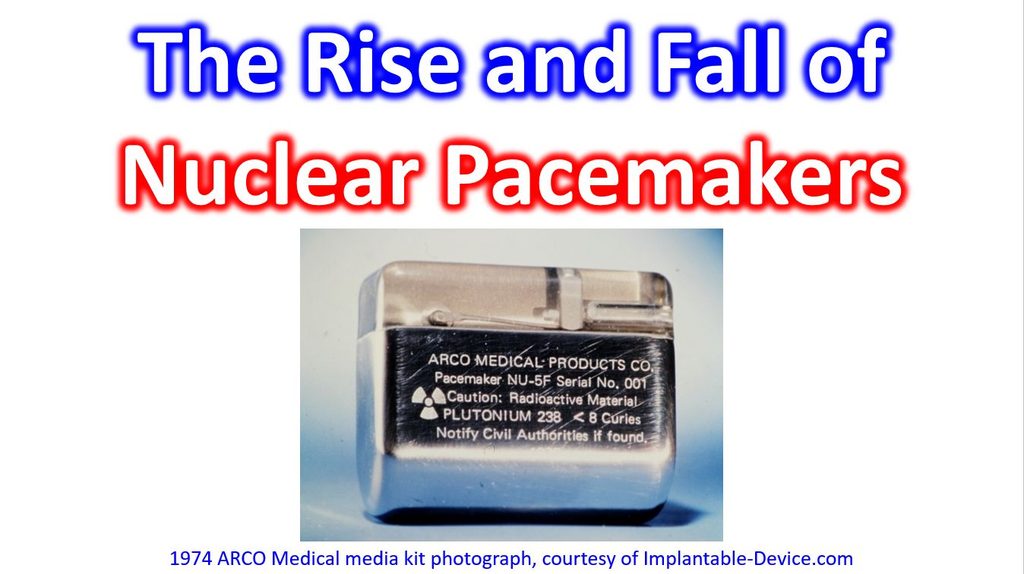

In the late 1960s and 1970s, nuclear-powered pacemakers fueled by Plutonium-238 were hailed as a medical marvel. They offered incredible longevity, with power supplies capable of lasting 20 to 40 years without needing a replacement. Despite this astonishing lifespan, the technology was largely abandoned by the mid-1980s. The discontinuation of these highly durable devices was driven by a combination of alternative technological advancements, strict regulations, and end-of-life safety concerns.
Key Reasons for Discontinuation
- The Lithium Battery Breakthrough: The primary catalyst for the decline of nuclear pacemakers was the invention of the non-rechargeable lithium-iodine battery in 1972. While early chemical pacemaker batteries (like zinc-mercury) only lasted around two years, the new lithium batteries offered a highly reliable lifespan of 5 to 10 years. For the average pacemaker recipient, this was sufficient and entirely eliminated the need for complex nuclear technology. Newer advanced pacemakers and Implantable Cardioverter Defibrillators (ICDs) have transitioned to newer chemistries like Lithium Carbon Monofluoride (CFx) or Lithium Silver Vanadium Oxide (Li/SVO).
- The Cremation Hazard: Nuclear pacemakers were encased in hard titanium designed to withstand severe trauma, including direct gunshots. However, there was a persistent fear that if a patient was unknowingly cremated with the device still inside them, the extreme heat could compromise the casing and release highly toxic, radioactive Plutonium-238 into the atmosphere.
- Strict Regulatory Burdens: Because they contained radioactive isotopes, the devices were heavily regulated by government bodies like the Nuclear Regulatory Commission (NRC). Patients carrying them had to be tracked constantly. Upon a patient’s death, the device strictly had to be surgically explanted and returned to a designated facility, such as Los Alamos National Laboratory, for safe disposal and recovery.
- Cost and Scarcity: Plutonium-238 is exceptionally rare and expensive to produce. Because of its unique heat-generating properties, the limited global supply is heavily prioritized for deep space exploration—such as powering the Mars Perseverance rover—making it economically and logistically impractical for widespread medical use.
- Public Perception: Although the actual radiation dose to the patient was minimal (about 0.1 rem per year, as the alpha emissions were easily stopped by the casing), public fear of radiation grew significantly in the late 1970s. Following nuclear incidents like Three Mile Island, there was a strong cultural backlash against carrying radioactive implants.
Clinical and Hardware Obsolescence
From a clinical management perspective, a battery that lasts half a century is only useful if the device attached to it remains relevant.
- Pacing Logic: Early nuclear devices utilized basic asynchronous (VOO) or simple single-chamber demand (VVI) modes. As dual-chamber (DDD) and rate-responsive pacing became the standard of care, patients with nuclear devices were locked into outdated, non-physiologic pacing algorithms unless the generator was surgically replaced anyway.
- Lead Survival: Endocardial lead survival over a 40-year horizon is notoriously poor. Lead fractures, insulation breaches, or changes in pacing thresholds frequently necessitate surgical revision long before the nuclear generator approaches its end of life, effectively nullifying the advantage of a permanent power source.
Ultimately, while the engineering was revolutionary, the logistical and regulatory headaches of nuclear batteries simply outweighed their benefits once safer, cheaper lithium alternatives became readily available.