


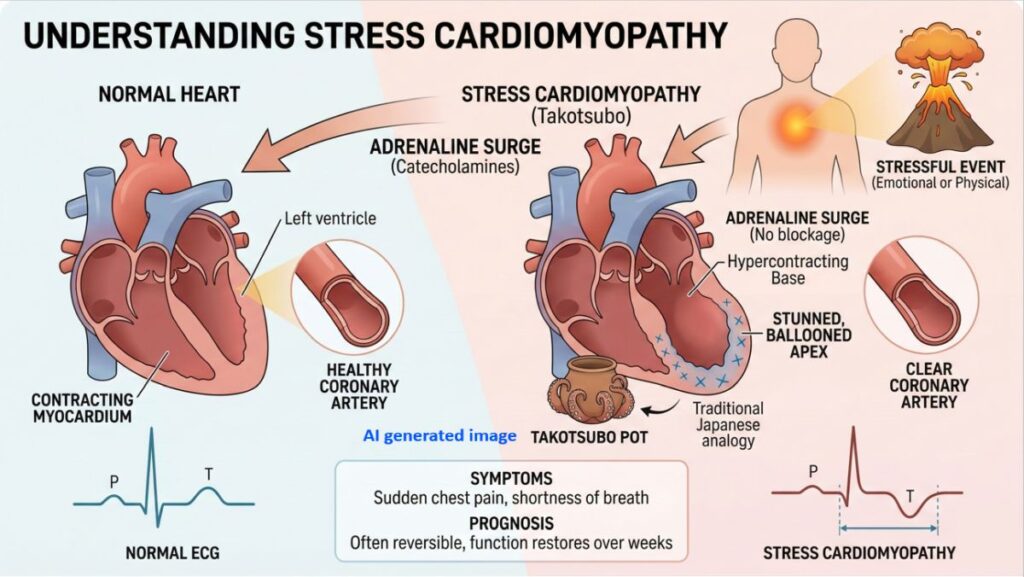
Stress cardiomyopathy, also commonly known as Takotsubo cardiomyopathy or “Broken Heart Syndrome,” is a temporary heart condition that often mimics a heart attack but is triggered by severe emotional or physical stress rather than clogged arteries.
Pathophysiology
The exact cause isn’t fully understood, but it is widely believed to be caused by a catecholamine surge (epinephrine and norepinephrine). This “adrenaline storm” can “stun” the myocardium, particularly at the apex of the left ventricle.
- The “Takotsubo” Shape: The name comes from a Japanese octopus trap (takotsubo), which has a round bottom and a narrow neck. During an episode, the left ventricle balloons out at the bottom while the top stays narrow, creating a distinctive shape on an echocardiogram.
Clinical Presentation
Patients usually present with symptoms identical to an Acute Coronary Syndrome (ACS):
- Sudden, intense chest pain.
- Shortness of breath.
- Syncope (fainting).
Diagnosis
Because it looks so much like a heart attack, the diagnosis is often one of exclusion:
- ECG: Often shows ST-segment elevation or T-wave inversion (similar to a STEMI).
- Cardiac Biomarkers: Troponin levels are typically elevated, though often not as high as the degree of wall motion abnormality would suggest.
- Coronary Angiography: Crucially, this will show no significant coronary artery obstruction.
- Echocardiogram/Ventriculography: Reveals the classic “apical ballooning” and reduced ejection fraction.
Comparison: Stress Cardiomyopathy vs. Myocardial Infarction
| Feature | Stress Cardiomyopathy | Myocardial Infarction (MI) |
| Trigger | Intense emotional or physical stress | Plaque rupture/Blood clot |
| Arteries | Usually clean/non-obstructive | Obstructed/Blocked |
| Ventricle Shape | Apical ballooning (Takotsubo) | Regional wall motion matching a vessel |
| Recovery | Days to weeks (usually full) | May have permanent scarring |
Management & Prognosis
- Acute Phase: Supportive care is key. Doctors often use standard heart failure medications (ACE inhibitors, beta-blockers, and diuretics) to reduce the workload on the heart.
- Prognosis: Most patients see a full recovery of heart function within 1–4 weeks. While generally benign, complications like heart failure, arrhythmias, or cardiogenic shock can occur in the acute stage.