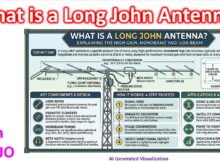
A “Long John” antenna is a highly directional Yagi-Uda (beam) antenna characterized by an exceptionally long boom. Though originally an antenna from a specific manufacturer, the term is
At first glance, Amplitude Modulation (AM) seems like an archaic choice for modern aviation, especially given Frequency Modulation’s (FM) superior noise immunity. However, the aviation industry sticks to
These seedlings are growing wildly in search of light, indicating positive phototropism. My friend told me that he had seen Okra seedling growing wildly when magnets were placed
What makes a Log-Periodic Dipole Array (LPDA) special is its ability to maintain consistent electrical characteristics—impedance, VSWR, radiation pattern, and forward gain—over an exceptionally wide range of frequencies.
A phased array antenna uses two or more radiating elements driven by the same transmitter. By carefully controlling the timing (phase) of the RF signal reaching each element,
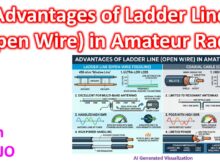
The single greatest advantage of ladder line (open wire feedline) in amateur radio is its extremely low loss, even when operating with a very high Standing Wave Ratio
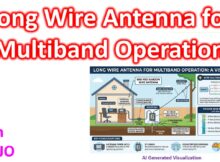
When amateur radio operators talk about a “long wire” for multiband operation, they are usually referring to a Random Wire Antenna. Technically, a true long wire must be
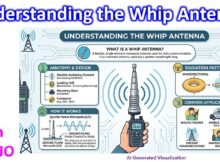
A whip antenna is a flexible, single-element antenna consisting of a straight, stiff wire or metallic rod. It is the most common type of monopole antenna, widely used
A Turnstile antenna operating in axial mode is one of the most reliable and widely used omnidirectional antennas for satellite communication. When you need a fixed ground station
While both Extremely Low Frequency (ELF) and Very Low Frequency (VLF) systems are designed to overcome the barrier that seawater presents to standard radio waves, they operate on