I am compiling 50 brand-new questions covering new areas of the ASOC General Grade syllabus, including advanced electronics, additional Q-codes, propagation phenomena, and Indian regulations. ASOC General Grade
Here are 50 Multiple Choice Questions (MCQs) for the Indian Amateur Station Operator’s Certificate (ASOC) General Grade examination, covering electronics theory, radio principles, and Indian regulations. Part 1:
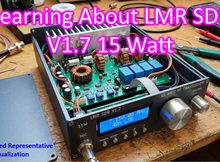
The LMR SDR V1.7 is a multiband software-defined transceiver designed by YE3CIF. Its major upgrade from earlier iterations is the integration of a 15-watt power amplifier directly onto
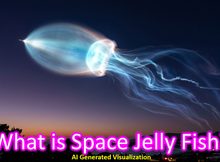
A “space jellyfish” is a spectacular, luminous atmospheric phenomenon that sometimes occurs during rocket launches. It happens during morning or evening twilight (just before sunrise or after sunset)
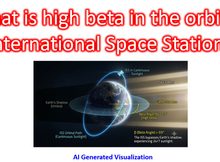
In the context of the International Space Station (ISS), the beta angle is the angle between the station’s orbital plane and the direction of the Sun. A “high
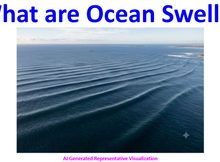
Ocean swells are series of smooth, long-period waves that have traveled far from their original generating area. While ordinary waves are created by local winds and tend to
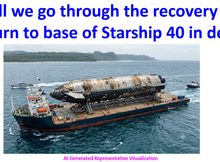
Ship 40 made history during Starship Flight 13 by remaining fully intact after its Indian Ocean splashdown, prompting SpaceX to undertake an unprecedented 75-day maritime recovery operation. Instead
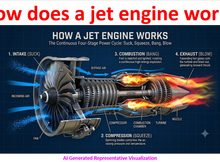
Jet engines operate on a continuous power cycle often described in aviation as “Suck, Squeeze, Bang, Blow.” They draw in air, compress it, ignite it with fuel, and
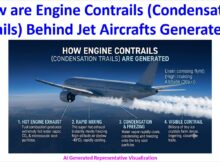
Contrails are essentially long, artificial ice clouds. They form when hot, humid water vapor from a jet engine’s exhaust rapidly cools and freezes upon mixing with the extremely
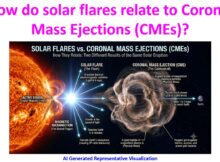
The simplest way to understand the difference is the cannon analogy: a solar flare is the flash of light from the muzzle, while a Coronal Mass Ejection (CME)