What is Physiological Nitrogen Purging Prior to EVA?
Physiological nitrogen purging—widely known in aerospace medicine as an oxygen prebreathe protocol or nitrogen washout—is a mandatory health and safety procedure performed by astronauts before conducting an Extravehicular Activity (EVA) or spacewalk.
Why Is Nitrogen Purging Necessary?
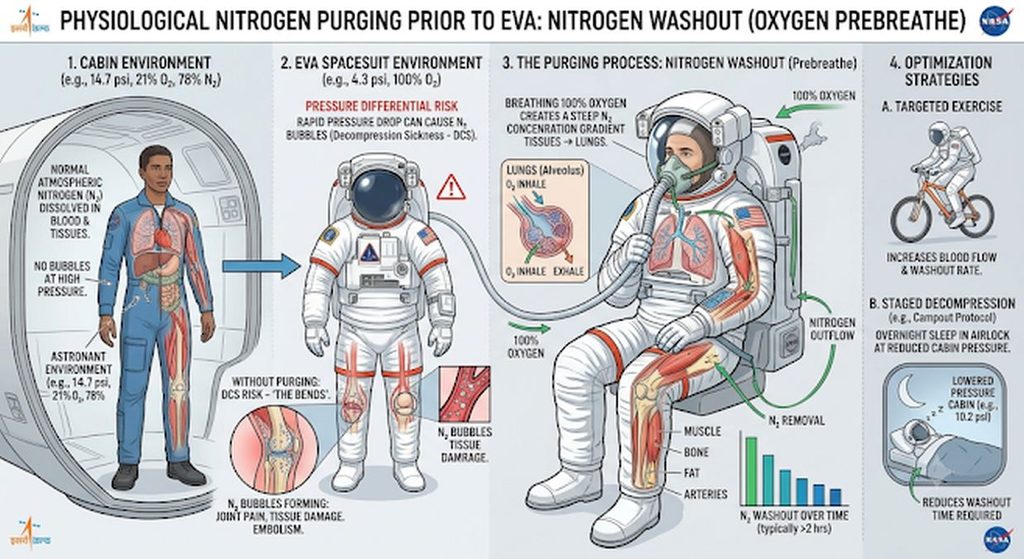
Inside spacecraft habitats like the International Space Station (ISS), the cabin environment is maintained at standard sea-level or comfortable mixed pressures containing a high concentration of nitrogen (just like Earth’s atmosphere). However, to allow astronauts to bend their joints and move around while wearing bulky pressurized garments, spacesuits operate at a
much lower pressure (approximately 4.3 psi or 29.6 kPa).If an astronaut moved directly from a high-nitrogen cabin into a low-pressure spacesuit without preparation, the nitrogen dissolved in their blood and tissues would rapidly come out of solution and form gas bubbles. This results in
Decompression Sickness (DCS)—commonly known as “the bends”—which can cause joint pain, neurological disorders, circulatory collapse, and life-threatening medical emergencies.
How the Physiological Process Works
To prevent bubble formation, astronauts undergo a systematic purging process:
- Breathing 100% Oxygen: Astronauts breathe pure oxygen through a mask or a suited helmet for a designated period (typically around two hours or more).
- Denitrogenation (Nitrogen Washout): Inhaling pure oxygen creates a steep concentration gradient between the lungs and the body’s tissues. This causes the dissolved nitrogen gas trapped in the blood, muscles, and tissues to diffuse into the bloodstream, travel to the lungs, and be exhaled.
Modern Optimizations: Exercise and Staged Decompression
Because long resting prebreathe protocols are time-intensive, modern space agencies use advanced strategies to speed up nitrogen elimination safely:
- Targeted Exercise: Incorporating brief periods of light or heavy exercise during the oxygen prebreathe phase increases cardiac output and blood flow, drastically accelerating the washout of nitrogen from slow-clearing tissues (like bone and deep muscle).
- Staged Decompression (“Campout” Protocols): Astronauts often sleep overnight in a slightly depressurized cabin airlock prior to the spacewalk. Lowering the ambient cabin pressure beforehand reduces the overall pressure differential, cutting down the required pure-oxygen breathing time on the day of the EVA.
Related Posts


About The Author
