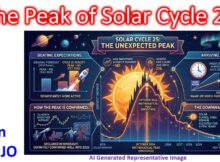
The Peak of Solar Cycle 25 The definitive peak—or “solar maximum”—of Solar Cycle 25 occurred in October 2024. At its peak, the cycle reached a maximum smoothed sunspot
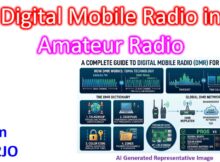
Digital Mobile Radio (DMR) has completely transformed the VHF/UHF landscape in amateur radio. Originally developed by the European Telecommunications Standards Institute (ETSI) for commercial use (like delivery fleets
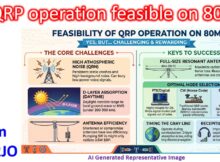
Yes, QRP (low power) operation on 80 meters is entirely feasible, but it is widely considered one of the more demanding combinations in amateur radio. Success on this
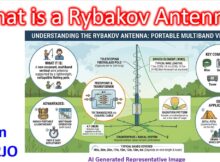
A Rybakov antenna is a non-resonant, multiband vertical wire antenna widely used in amateur radio, particularly for portable field operations, camping, and temporary setups. The name comes from
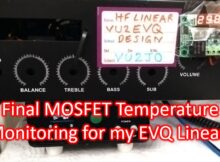
Connected a temperature monitor probe to one of the two IRFP final MOSFETS of my homebrew VU2EVQ linear amplifier. Power to the temperature probe board was paralleled to
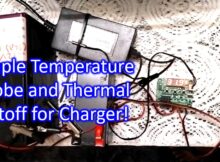
Very simple hobby project using a temperature probe and relay cut off. The cutoff temperature can be set in the relay using the preset push buttons. I have
In amateur radio, a panadapter (short for panoramic adapter) is a device or software feature that provides a real-time, visual display of radio signals across a wide band
Converted remnants of an old 4.1 music system and added a mic to make a home PA system. Originally it was working on a 12V AC transformer. Interestingly
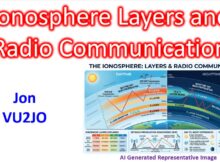
The ionosphere is a region of Earth’s upper atmosphere—extending from roughly 60 km to 1,000 km above the surface—where solar radiation strips electrons from atoms, creating a dense