All About Cardiovascular System and Disorders

Menu
  • Cardiology
    • Angiography and Interventions
      • Coronary Interventions
      • Peripheral Interventions
      • Structural Heart Disease Interventions
    • Cardiac CT scan
    • Cardiac Magnetic Resonance imaging
    • Cardiac rehabilitation
    • Cardiac Surgery
    • Cardio Oncology
    • Cardiology Basics
    • Cardiology Basics
    • Cardiology MCQ
      • DM / DNB Cardiology Entrance
    • Cardiology X-ray
    • Cardiomyopathy
    • Clinical Trial Review
    • ECG / Electrophysiology
      • ECG Library
    • Echocardiography
      • Echocardiogram Library
    • General Cardiology
    • HBC
    • Machine Learning and AI in Cardiology
    • Nuclear Cardiology
      • Positron emission tomography
    • Onco Cardiology
    • Peripheral Vascular Disease
  • Heart Disease FAQ
  • Medicine MCQ – CVS
  • ജനറൽ കാർഡിയോളജി
  • വ്യായാമം

Is it necessary to open the whole of the heart to repair an ASD?

Johnson Francis | May 15, 2012 | Heart Disease FAQ | No Comments

Is it necessary to open the whole of the heart to repair an ASD?

An atrial septal defect can be repaired even without surgery by a catheter based device which can occlude the defect. Catheters are small tubes introduced into the heart to study its function and defects or to treat heart disease. Even when the defect is not suitable for a device closure due to absence of good rim all around for the device to hold, ASD repair does not need opening up the whole heart. Even opening up of the sternum, the breast bone, situated in the middle of the chest is not needed for closing an ASD. A surgery on the right side of the chest, below the breast can give access to an ASD, which can be closed by opening up the right atrium, the upper chamber, only. Hospital stay is also short.
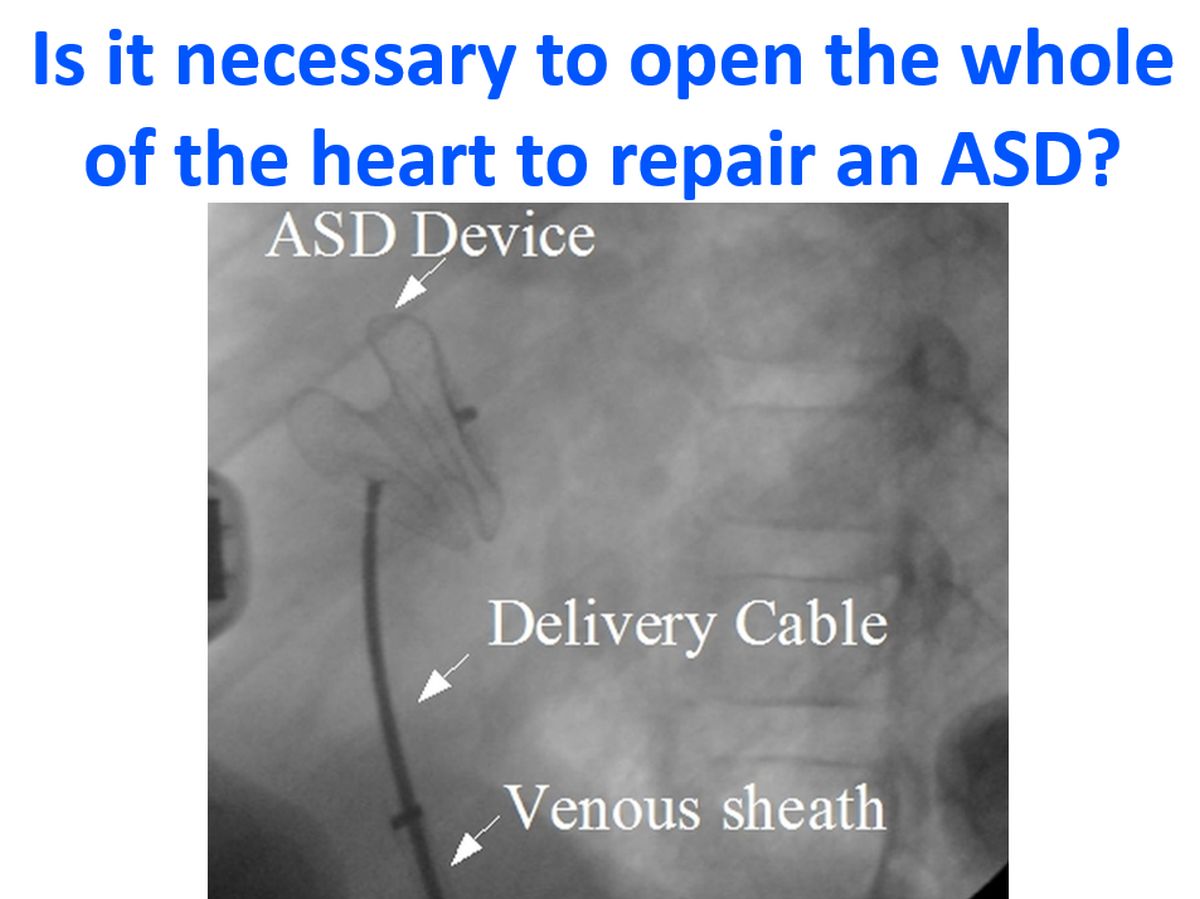
Is it necessary to open the whole of the heart to repair an ASD

Tags:ASD, ASD surgery, Atrial septal defect, catheter based device, clam shell like ASD device, closing an ASD

Related Posts

  • What are the precautions while taking warfarin (coumadin)?
    No Comments | May 14, 2012
  • What is TP segment on the ECG?
    No Comments | Oct 24, 2017
  • Cardiac only resuscitation (COR) – a more acceptable option for untrained persons
    No Comments | Apr 23, 2012
  • Why am I am getting repeated arrhythmia and shocks in spite of having an implanted defibrillator Why am I am getting repeated arrhythmia and shocks in spite of having an implanted defibrillator?
    No Comments | May 14, 2012

About The Author

Johnson Francis

Former Professor of Cardiology, Calicut Govt. Medical Kozhikode, Kerala, India. Editor-in-Chief, BMH Medical Journal

Categories

  • Angiography and Interventions
  • Cardiac CT scan
  • Cardiac Magnetic Resonance imaging
  • Cardiac rehabilitation
  • Cardiac Surgery
  • Cardio Oncology
  • Cardiology
  • Cardiology Basics
  • Cardiology Basics
  • Cardiology MCQ
  • Cardiology X-ray
  • Cardiomyopathy
  • Clinical Trial Review
  • Coronary Interventions
  • DM / DNB Cardiology Entrance
  • ECG / Electrophysiology
  • ECG Library
  • Echocardiogram Library
  • Echocardiography
  • General Cardiology
  • HBC
  • Heart Disease FAQ
  • Machine Learning and AI in Cardiology
  • Medicine MCQ – CVS
  • Nuclear Cardiology
  • Onco Cardiology
  • Peripheral Interventions
  • Peripheral Vascular Disease
  • Positron emission tomography
  • Structural Heart Disease Interventions
  • ജനറൽ കാർഡിയോളജി
  • വ്യായാമം

Disclaimer

This site is not meant for any medical advice or treatment decisions. If you have a medical condition, please contact your physician for advice. We do not endorse any products or services appearing on the site as advertisements. We do not intentionally collect or store any personal information. Third party services displaying ads may collect anonymized information over which we have no control. If you feel that it is not acceptable to you, please do not continue on this site.

Author: Johnson Francis, MBBS, MD, DM, Former Professor of Cardiology, Calicut Govt. Medical Kozhikode, Kerala, India. Editor-in-Chief, BMH Medical Journal

Abruptly Stopping Cholesterol Lowering Medications: Key Consequences

Understanding the Friedewald Equation for Calculation of LDL Cholesterol: An Indirect Method

How can you know if a Holter monitor stops recording?

Neurohumoral Activation in Heart Failure

Cardiac cycle simplified!

Congenital Anomalies of Aortic Arch: Key Features & Practical Significance

© 2026 All About Cardiovascular System and Disorders.
  • About
  • Devoted to the Cardiovascular Profession
  • ECG Basics – A Brief Review
    • Basic Principles of Electrocardiography
    • Chamber Enlargements
    • Electrical Axis
    • Monitoring Leads and Special Leads
    • Recording a Good ECG
    • Sinoatrial and Atrioventricular Conduction Defects
    • Supraventricular Arrhythmia – Part 1
    • Supraventricular Arrhythmia – Part 2
    • Twelve Lead ECG
    • Ventricular Arrhythmia
  • Privacy Policy
Go to mobile version