The management of life-threatening bleeding or the need for emergent surgical intervention in anticoagulated patients requires specific reversal strategies based on the drug class. Here is the quick-reference
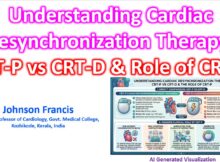
Both Cardiac Resynchronization Therapy (CRT) devices provide biventricular pacing to coordinate the contraction of the right and left ventricles. This corrects mechanical dyssynchrony, improves cardiac output, and reduces
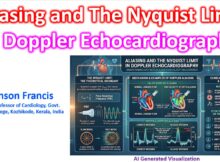
In Doppler echocardiography, aliasing is an artifact that occurs when the Doppler shift frequency exceeds the system’s ability to sample it accurately. The threshold at which this signal
Distinguishing a small Atrial Septal Defect (ASD) from a Patent Foramen Ovale (PFO) on an echocardiogram hinges on identifying whether there is a true anatomical deficiency of septal
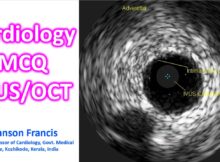
Question 1: Fundamental Principles Which of the following physical characteristics primarily distinguishes OCT from IVUS imaging?A) OCT uses high-frequency sound waves, whereas IVUS utilizes near-infrared light.B) OCT relies
Ventricular septal defects (VSDs) are primarily classified based on their anatomical location within the ventricular septum—the wall separating the heart’s right and left lower chambers. Because the septum
Echocardiographic evaluation of Aortic Stenosis (AS) requires a multi-parametric approach, synthesizing 2D valve morphology, meticulous Doppler hemodynamics, and the impact of the stenosis on the left ventricle. 1.
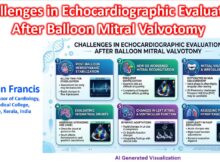
Evaluating a patient immediately after Balloon Mitral Valvotomy (BMV/PTMC) is one of the more hemodynamically complex scenarios in the echo lab. Because the procedure abruptly alters valve geometry,
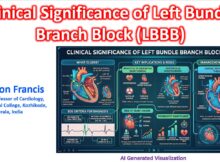
The clinical significance of Left Bundle Branch Block (LBBB) has evolved dramatically. Once viewed merely as a concerning electrocardiographic abnormality, it is now recognized as a primary driver
Both septal bounce and septal shudder are hallmark echocardiographic findings of constrictive pericarditis (CP). While they look slightly different on an echo, they are driven by the exact