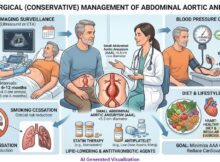
Intervention Thresholds Non-surgical (Conservative) management is the standard of care for asymptomatic abdominal aortic aneurysms (AAAs) that fall below the threshold for elective repair. Intervention is typically deferred
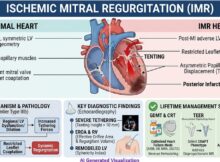
Ischemic mitral regurgitation (IMR) is one of the most challenging complications of coronary artery disease, shifting the clinical focus from a primary valve issue to a ventricular disease.
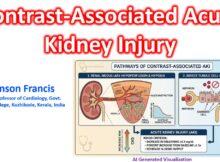
Contrast-Induced Acute Kidney Injury (CI-AKI) is being increasingly referred to as Contrast-Associated Acute Kidney Injury (CA-AKI). That is because post-contrast AKI may have causes other than contrast exposure.
People are searching for IRBBB primarily because of a collision between modern technology and scary-sounding medical terminology. More people are getting routine Electrocardiograms (ECGs) than ever before—whether through
Conduit selection in Coronary Artery Bypass Grafting (CABG) remains a critical factor in determining long-term graft patency, patient survival, and the need for repeat revascularization. The choice involves
Coronary steal is a brilliant concept to break down visually, as it perfectly illustrates the limits of microvascular autoregulation and explains the seemingly paradoxical effects of certain cardiac
Non-HDL cholesterol (Non-HDL-C) is not directly measured; it is derived from a simple calculation, subtracting high-density lipoprotein cholesterol (HDL-C) from total cholesterol (TC): Non-HDL-C = TC – HDL-C
Cardiac Magnetic Resonance (CMR) has established itself as the non-invasive gold standard for myocardial tissue characterization. In ischemic heart disease (IHD), its utility extends far beyond simple ejection
The management of congenital complete heart block (CCHB) has evolved from a reactive approach to one that emphasizes prenatal risk stratification, pharmacological prevention, and long-term pacing strategies designed
Rotational atherectomy (RA), commonly known as rotablation, is a percutaneous coronary intervention (PCI) technique used to modify heavily calcified coronary lesions prior to balloon angioplasty and stent placement.