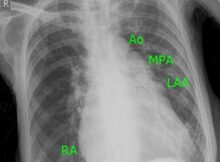
Chest X-ray in Mitral Stenosis with third mogul sign Main pulmonary artery segment is usually concave on a normal chest X-Ray. Here it is seen as convex, bulging
Intravenous P2Y12 receptor inhibitor: a) Ticagrelor b) Clopidogrel c) Prasugrel d) Cangrelor Correct answer: d) Cangrelor Cangrelor is a reversible intravenous P2Y12 receptor inhibitor. It is a rapid and potent
Ranolazine is: a) Inhibitor of late sodium current b) If current inhibitor c) Potassium channel opener d) Calcium channel blocker Correct answer: a) Inhibitor of late sodium current
Advantages of low molecular weight heparin (LMWH) over unfractionated heparin (UFH) includes all of the following except: a) Nearly complete absorption after subcutaneous administration b) More predictable dose-effect
Wrong statement about nitrates: a) Predominantly venodilators b) Have coronary vasodilator effects c) Contraindicated in vasospastic angina d) Should be avoided in hypotensive patients Correct answer: c) Contraindicated
Beta blockers reduce myocardial oxygen consumption by: a) Reducing heart rate b) Reducing blood pressure c) Reducing myocardial contractility d) All of the above Correct answer: d) All
Threshold for transfusion in anemia with acute coronary syndrome and no hemodynamic compromise: a) <10 g/dl b) <9 g/dl c) <8 g/dl d) <5 g/dl Correct answer c)
Wrong statement about prasugrel: a) Not influenced by CYP inhibitors b) Higher bleeding risk in those with previous cerebrovascular events c) Use in acute coronary syndrome is better