Category: ECG / Electrophysiology
ECG / Electrophysiology
Defibrillator is a device for delivering high energy direct current electric shocks in a controlled manner to correct abnormalities in cardiac rhythm.
Read More
ECG / Electrophysiology
An electrocardiograph records the electrical activity of the heart from the surface of the body. The recorded graph is called an electrocardiogram (ECG).
Read More
ECG / Electrophysiology
Cardiac pacemaker is a device meant to give regular electrical pulses to the heart when the normal pacemaker function of the heart is defective.
Read More
ECG / Electrophysiology
Cardiac resynchronization therapy (CRT) is being explored as an option for high operative risk moderate to severe functional mitral regurgitation.
Read More
ECG / Electrophysiology
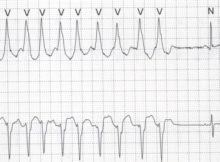
Wide QRS tachycardia on Holter documented by Holter monitoring.
Read More
ECG / Electrophysiology
Right atrial infarction is more common than left atrial infarction, possibly because of the higher oxygen concentration in the left atrial blood.
Read More
ECG / Electrophysiology
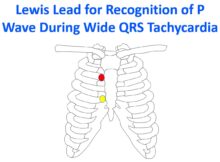
Lewis lead is useful for recognition of P wave during wide QRS tachycardia when the P waves are usually obscured by the QRS complex or T wave.
Read More
ECG / Electrophysiology
KCNJ5 or the potassium inwardly-rectifying channel, subfamily J, member 5 is the gene involved in in congenital long QT syndrome 13 (LQTS13).
Read More
ECG / Electrophysiology
Long QT syndrome 13 (LQT13) has been described by Yang and associates in a large four generation Chinese family in 2010.
Read More
ECG / Electrophysiology
Twelve types of familial atrial fibrillation has been described in the OMIM (Online Mendelian Inheritance in Man) database.
Read More
Posts navigation