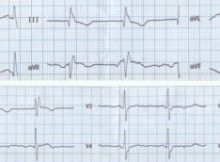
ECG showing right bundle branch block. Right bundle branch block is characterised by an RSR’ pattern with the R’ being slurred, producing a QRS duration of 120 msec
Ulinastatin is a (choose the correct answer): (a) Urinary trypsin inhibitor (b) HMG-CoA reductase inhibitor (c) Lipid lowering agent (d)
None of the above
Pick the wrong statement about vena contracta (VC): (a) Measurement of VC is a method for quantification of MR (b) VC is narrowest region of neck of MR
Vena contracta for quantification of mitral regurgitation Measurement of the Vena Contracta is one of the methods for quantification of mitral regurgitation. Vena contracta is the narrowest region
Murmur of subvalvular aortic stenosis is unlikely to radiate to the carotids. Murmur of supravalvar aortic stenosis may radiate more to the right carotid. Supravalvar aortic stenosis is
Bayes syndrome is (choose the correct answer): (1) Third degree interatrial block with paroxysmal supraventricular arrhythmias (2) Pre test probability is proportional to post test probability in treadmill