Latest
ECG / Electrophysiology
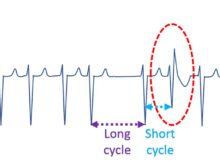
Ashman phenomenon is a form of aberrancy which was described by Gouaux and Ashman in atrial fibrillation.
Read More
Echocardiogram Library
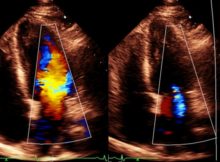
HNOCM with MR: colour Doppler and tissue Doppler images in hypertrophic non obstructive cardiomyopathy with mitral regurgitation.
Read More
ECG / Electrophysiology
Mitsui et al was the first to describe pacemaker syndrome in 1969 as a symptom complex associated with right ventricular pacing .
Read More
ECG / Electrophysiology
Electrical alternans is a phenomenon seen on the electrocardiogram with alternation in the amplitude of QRS complexes.
Read More
ECG / Electrophysiology
Lown Ganong Levine syndrome is one of the pre-excitation syndromes like the better known Wolf Parkinson White (WPW) syndrome.
Read More
General Cardiology
Holt-Oram syndrome was described by Mary Holt and Samuel Oram as 'Familial heart disease with skeletal malformations'.
Read More
Echocardiogram Library
Colour Doppler of mitral flow on echocardiography with colour flow mapping (CFM) from the apical four chamber view.
Read More
Echocardiogram Library
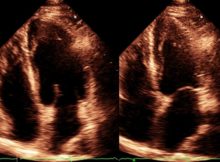
Systolic and diastolic frames from apical 4C view on echocardiography seen on the same screen.
Read More
General Cardiology
Ebstein's anomaly is characterised by the distal displacement of the septal and posterior leaflets of the tricuspid valve.
Read More
ECG / Electrophysiology
Pulseless electrical activity (PEA) refers to any cardiac rhythm in which there is no palpable pulse, but the ECG shows cardiac activity.
Read More