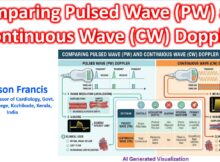
The fundamental difference between Pulsed Wave (PW) and Continuous Wave (CW) Doppler lies in how the ultrasound signals are transmitted and received, which dictates their ability to pinpoint
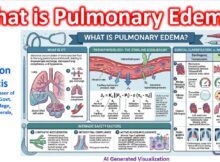
Pulmonary edema is the abnormal accumulation of extravascular fluid in the lung parenchyma and alveoli, leading to impaired gas exchange, decreased lung compliance, and hypoxemia. Pathophysiologically, it represents
Total Anomalous Pulmonary Venous Connection (TAPVC)—also referred to as TAPVR (Return)—is universally categorized using the Darling Classification, which groups the anomaly based on the anatomical site where the
When a patient abruptly discontinues lipid-lowering therapy—specifically statins—the clinical outcome is dictated less by the gradual return of circulating cholesterol, and more by an acute pleiotropic rebound (a
The Friedewald equation is a long-standing clinical formula used to estimate Low-Density Lipoprotein (LDL) cholesterol in the blood, eliminating the need for a direct (and historically more expensive)
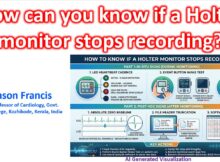
Because confirming a stopped Holter monitor depends entirely on whether you are looking at it in-situ (on the patient) or post-hoc (at the analysis workstation), the verification methods
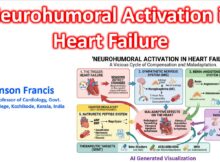
Neurohumoral activation in heart failure (HF) represents a classic physiological paradox: short-term evolutionary compensatory mechanisms—designed to maintain blood pressure and vital organ perfusion during acute volume loss—transform into
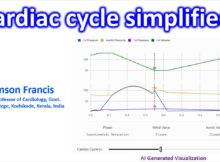
The cardiac cycle refers to the complete sequence of electrical and mechanical events that occur in the heart from the beginning of one heartbeat to the beginning of
Congenital anomalies of the aortic arch arise from the abnormal regression or persistence of the embryonic branchial arches (specifically the fourth arch and the dorsal aortae). While many
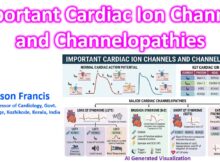
The electrical stability of the heart relies on a highly synchronized sequence of cellular events known as the cardiac action potential. This impulse is governed by the intricate