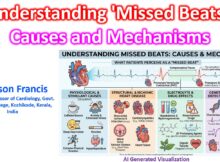
What patients typically perceive as a “missed beat” is rarely an actual dropped electrical cycle (like in a high-degree AV block). Most often, the sensation is the compensatory
The Valsalva maneuver remains one of the most elegant, non-invasive bedside tools in our clinical arsenal. Because it produces a predictable, four-phase sequence of hemodynamic changes, it allows
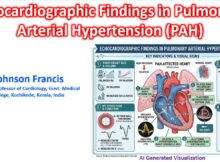
Echocardiography is the first-line non-invasive imaging modality for evaluating suspected pulmonary arterial hypertension (PAH). While right heart catheterization (RHC) remains the gold standard for definitive diagnosis, an echocardiogram
While the historical standard was a blind subxiphoid approach, the modern standard of care relies heavily on 2D echocardiography. The paradigm has shifted to a “point of maximal
Neither is universally “better” for a baseline diagnosis, as both carry Class I guideline recommendations for diagnosing heart failure and establishing prognosis. However, in contemporary clinical practice, NT-proBNP
The “funny current” (often written as If) isn’t humorous in a comedic sense—it was named “funny” by scientists in the late 1970s because it behaved in a completely
Triiodothyronine (T3) exerts a profound, dual-pronged effect on the cardiovascular system: it acts directly on the cardiomyocyte to alter gene expression and ion channel activity, and indirectly on
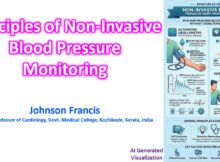
While invasive arterial cannulation remains the clinical gold standard in acute care setting, non-invasive blood pressure (NIBP) monitoring relies on applying external counter-pressure to assess arterial wall dynamics.
For decades, seeing a slight lift in the J-point on an ECG—traditionally called Early Repolarization (ER)—was stamped as a “benign normal variant.” It was the classic “athlete’s heart”
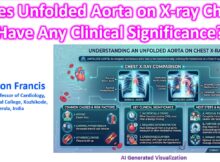
An unfolded (or tortuous) aorta on a chest X-ray is primarily an incidental, age-related morphological change, but it shouldn’t be dismissed as entirely meaningless. While it is usually