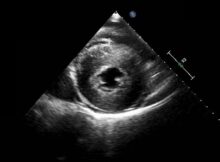
Ebstein’s Anomaly of Tricuspid Valve Parasternal short axis view in Ebstein’s anomaly, showing the dilated right ventricular outflow tract (RVOT). Ao: Aorta. Parasternal long axis view in Ebstein’s
LVH on echocardiogram Parasternal short axis view at the level of the papillary muscles showing severe concentric left ventricular hypertrophy. Serial short axis views have to be obtained
All of the following are features of Timothy syndrome except: a) CACNA1C mutation b) Named after Katherine W. Timothy c) Phase 1 of action potential is affected by
Factors increasing the risk of stent thrombosis The factors related to the stent which increase the chance of stent thrombosis are the following: First generation drug eluting stents
DAPT Score to decide on utility of prolonged dual antiplatelet therapy DAPT score is based on the Dual Antiplatelet Therapy Study [1] and is used to assess the
CXR showing dilated RVOT Chest X-ray PA view showing a bulge along the left border, below the aortic knuckle and pulmonary bay. Sternal wires are seen near the mid line, which would
Risk factor/s for upper limb venous thrombosis: a) Vigorous arm exercise b) Central venous catheter c) Pacemaker / defibrillator leads d) All of the above Correct answer: d)
Wrong statement about deep vein thrombosis of upper limbs compared to lower limbs: a) Lower chance of pulmonary embolism b) Higher recurrence at one year c) Lower incidence
Risk of intracranial bleed for tenecteplase in acute pulmonary embolism: a) 2% b) 5% c) 10% d) 15% Correct answer: a) 2% The incidence hemorrhagic stroke after thrombolysis
Surgical embolectomy in pulmonary embolism is indicated in: a) Impending paradoxical systemic embolism b) Hypotension with contraindication for thrombolysis c) Failed thrombolysis d) All of the above Correct