Latest
Heart Disease FAQ
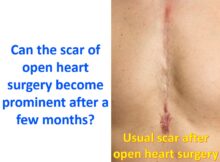
Scar of open heart surgery takes about six months to become stable. It can enlarge in size in certain prone individuals up to about six months.
Read More
ECG / Electrophysiology
Supra ventricular ectopics are premature beats originating above the ventricles.
Read More
ECG / Electrophysiology
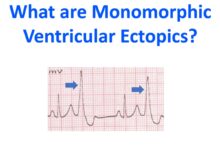
Monomorphic ventricular ectopics are premature ventricular beats having the same morphology or shape.
Read More
Heart Disease FAQ
Bruce protocol for treadmill exercise test has seven stages, each lasting three minutes.
Read More
Heart Disease FAQ
TMT test is short form for treadmill exercise test. TMT is done on a motorized treadmill which is controlled by a computer console.
Read More
Heart Disease FAQ
ECG cannot detect all heart problems. ECG is a record of electrical activity of heart and detects only heart problems which alter its electrical activity.
Read More
Heart Disease FAQ
Hypokinesia means decreased motion. The term is applied to the movement of regions of the heart.
Read More
ECG / Electrophysiology
WPW syndrome is characterized on the ECG by a short PR interval, wide QRS complex and a delta wave at the beginning of the QRS complex.
Read More
Heart Disease FAQ
Statins are drugs like atorvastatin which inhibits cholesterol synthesis by inhibiting the liver enzyme HMG Co A reductase, which is more active at night.
Read More
Heart Disease FAQ
Left ventricular failure is a potentially life threatening condition, depending on how rapidly it progresses and how severe it is.
Read More
Posts navigation