Treatment of Progeria with Farnesylation Inhibitors Hutchinson-Gilford Progeria Syndrome (HGPS) is a genetic disorder characterized by premature aging and the affected children die of myocardial infarction or cerebrovascular
Extravirgin olive oil may reduce atrial fibrillation – PREDIMED sub study The PREDIMED (Prevención con Dieta Mediterránea) was a randomized primary prevention trial which evaluated extravirgin olive oil
Can you explain the mechanism of heart muscle contraction? Heart muscle contraction occurs due to the sliding in of actin and myosin myofilaments so that the length of
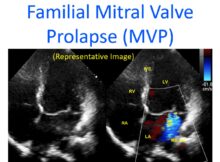
Familial mitral valve prolapse (MVP) Inheritance pattern of mitral valve prolapse has been thought to be in an autosomal dominant pattern. Devereux et al [1] studied 45 probands
Point of care cardiac troponin testing Point of care testing of cardiac biomarkers is being increasingly used in the emergency care setting to enhance the triaging of patients
Regadenoson for vasodilator myocardial stress – selective A2A receptor agonist Regadenoson for vasodilator myocardial stress: Regadenoson, adenosine and dipyridamole are the three vasodilators which can be used during
Frailty and cardiovascular outcome In an article in the Journal of American College of Cardiology, [1] Jonathan and colleagues addressed the issue of frailty in the elderly and
Advantages of AV synchrony (atrioventricular synchrony) Atrial systole which is appropriately timed with respect to ventricular diastole helps in keeping the mean atrial pressure low and facilitate venous
Can heparin be prothrombotic? Unfractionated heparin can theoretically make platelets more reactive to activation by other platelet function agonists such as adenosine diphosphate. Heparin can bind to Glycoprotein
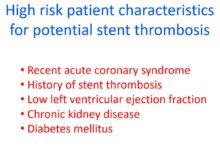
High risk patient characteristics for potential stent thrombosis High risk patient characteristics for potential stent thrombosis while interrupting antiplatelet agents for surgery are: Recent acute coronary syndrome History