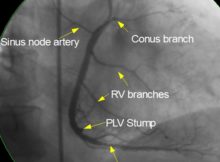
Right coronary angiogram showing conus branch, sinus node artery, right ventricular branches, posterior descending coronary artery and the stump of posterior left ventricular branch.
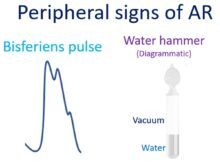
Peripheral signs of aortic regurgitation (AR) are mostly due to the high stroke volume and high pulse pressure. These are features of aortic run off and can occur
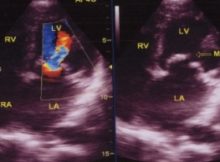
Color Doppler Echocardiogram in Mitral Stenosis showing thickened and domed mitral leaflets, turbulent colour jet across the mitral valve in the right panel and Doppler tracing with E
Gross enlargement of cardiac outline due to pericardial effusion. Other causes of such huge enlargement of cardiac outline are Ebstein's anomaly of tricuspid valve, multivalvular heart disease and
X-Ray chest PA view showing Mesocardia with levo transposition of great arteries (L-TGA). The bulge along the left upper cardiac border is the levo posed aorta.
Ebstein’s Anomaly of Tricuspid Valve Parasternal short axis view in Ebstein’s anomaly, showing the dilated right ventricular outflow tract (RVOT). Ao: Aorta. Parasternal long axis view in Ebstein’s
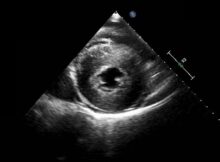
LVH on echocardiogram Parasternal short axis view at the level of the papillary muscles showing severe concentric left ventricular hypertrophy. Serial short axis views have to be obtained
All of the following are features of Timothy syndrome except: a) CACNA1C mutation b) Named after Katherine W. Timothy c) Phase 1 of action potential is affected by